Heritage
A house, in its own words
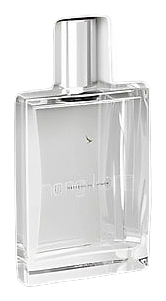
Cathay Pacific’s history begins in the final months of the Second World War. American pilot and businessman Roy Farrell and Australian pilot Sydney de Kantzow identified an opportunity to reconnect Hong Kong with international markets. The airline was established in Hong Kong in 1946, and its first flight departed from Sydney for Hong Kong on 25 September, one day after the company was founded. That inaugural service connected the two cities where Farrell and de Kantzow had built their aviation careers, giving the new airline a distinctly international beginning. The early fleet carried passengers and mail while Hong Kong’s position between China and the wider Asia-Pacific region shaped the airline’s growth. Cathay Pacific expanded its network as commercial aviation developed and as the city became a major centre for trade and travel. The company is now based in Hong Kong and serves as its flag carrier, with its principal hub at Hong Kong International Airport. Cathay Pacific’s heritage also includes a close relationship with distance. Its early routes linked widely separated communities, while later services helped position Hong Kong as an international gateway. The airline’s 80-year history, marked in 2026, is a story of long-haul travel and changing connections across the Asia-Pacific region. Scent entered this story later. In 2017, Cathay Pacific introduced Parfum de Voyage to Australian travellers, using fragrance to associate the airline with place and the experience of arriving in a new city. The project stands apart from a conventional airline amenity because it treats smell as a means of expressing the emotional impression of travel. A separate Cathay Pacific scent was created for The Pier, the airline’s first-class lounge, extending the brand into a carefully designed hospitality environment. Cathay Pacific approaches fragrance through the idea of destination. Parfum de Voyage was developed for the Australian market in 2017 with the aim of connecting Australian travellers with both the airline and the city they were visiting. Its creation was described as data-driven and sensory, suggesting that the brief began with an understanding of how travellers perceive arrival rather than with a predetermined visual identity. This approach makes fragrance part of the memory of a journey. A perfume can evoke a hotel, a street, a change in climate or the anticipation that follows a long flight. By naming the collection “Parfums de Voyage,” Cathay Pacific places scent within the wider ritual of travel and makes the city part of a personal experience that continues after landing. The airline’s lounge fragrance followed a related but distinct creative direction. Designed for The Pier, it was characterised by subtle woods, a restrained scent suited to a calm, private space. Here, fragrance functions as an element of ambience. It welcomes passengers, establishes the character of the environment and contributes to a sense of place without becoming the sole focus. Across both projects, the common principle is contextual design. Scent is tailored to a particular audience, destination or setting. The goal is not simply to apply a recognisable fragrance. It is to create an emotional association that makes travel feel more personal and gives the airline’s identity a sensory dimension.