
The Story
Why it exists.
The beginning
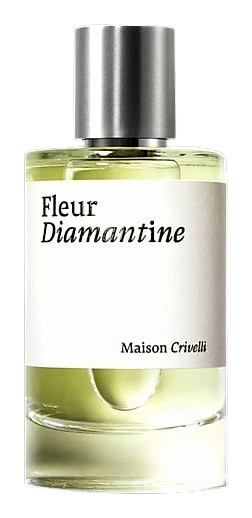
Bertrand Duchaufour built Fleur Diamantine around a paradox: the diamond flower doesn't exist, yet the name captures something real, the way certain light hits white petals and fractures into memory. The brief from Maison Crivelli likely pointed toward that quality of iridescence, the fleeting brilliance of something too pure to hold. Duchaufour answered with a fragrance that opens cool and crystalline, then quietly becomes something genuine, jasmine and neroli, actual flowers, held in a structure so clean they feel suspended in air.
What makes this composition work is the way mint and saffron create a transparent buffer before the white florals arrive. Jasmine absolute is inherently rich, even indolic, coumarin and mint stop it from reading sweet or heavy. The oakmoss does something unusual: it gives a white floral fragrance a mineral-green undertone instead of a creamy one. This is not jasmine in cream. This is jasmine after rain, when the air is cool and the petals haven't warmed yet. Duchaufour's architectural instinct keeps every layer in its own space, nothing crowds, nothing overwhelms, the whole thing breathes.
The evolution
Mint opens, bright, almost metallic, a chill that sits on the skin like morning air. Then jasmine steps in, not gradually but with the confidence of something that's been waiting. Neroli sweetens it, adds a bitter-orange blossom quality that makes the white florals read clean rather than heavy. The mint doesn't disappear, it retreats to the edges, keeping everything honest. Oakmoss arrives last, not as a base but as a foundation, the way stone supports a garden wall. The drydown is moss and coumarin: warm, hay-like, faintly sweet. On fabric, it lingers for hours. On skin, expect 6-8 hours with moderate sillage, present without announcing itself, the kind of wear that people notice when they lean in.
Cultural impact
Maison Crivelli emerged in 2018 as part of a broader movement repositioning fragrance as cultural artifact rather than mere luxury good. Fleur Diamantine embodies this shift, using mint and saffron not as decorative accents but as structural forces that disrupt expected floral narratives. The fragrance participates in post-modern perfumery's questioning of what luxury smells like, blending mineral greens with luminous white florals in ways that feel both sensory and intellectual. Its note pyramid does not follow tradition; it proposes a new syntax where cool and warm coexist without resolution. This approach reflects contemporary design culture's interest in contradiction as aesthetic value, positioning scent as a discourse rather than a product.
