The Story
Why it exists.
The beginning
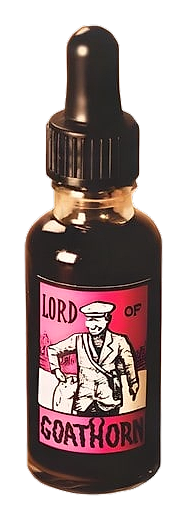
Lord of Goathorn is named for a longshoreman character, a working figure whose rough, salt-worn life the brand wanted to distil into scent. The brief wasn't comfort. It was a place, a person, a specific kind of coastal stubbornness. Perfumer Simon Constantine built the composition around the tension between herb and sea: tarragon's peppery bite, basil's green sharpness, seaweed absolute's mineral depth, and licorice's dark, sweet undercurrent. It arrived in 2012 as something Lush knew would divide the room, and meant it.
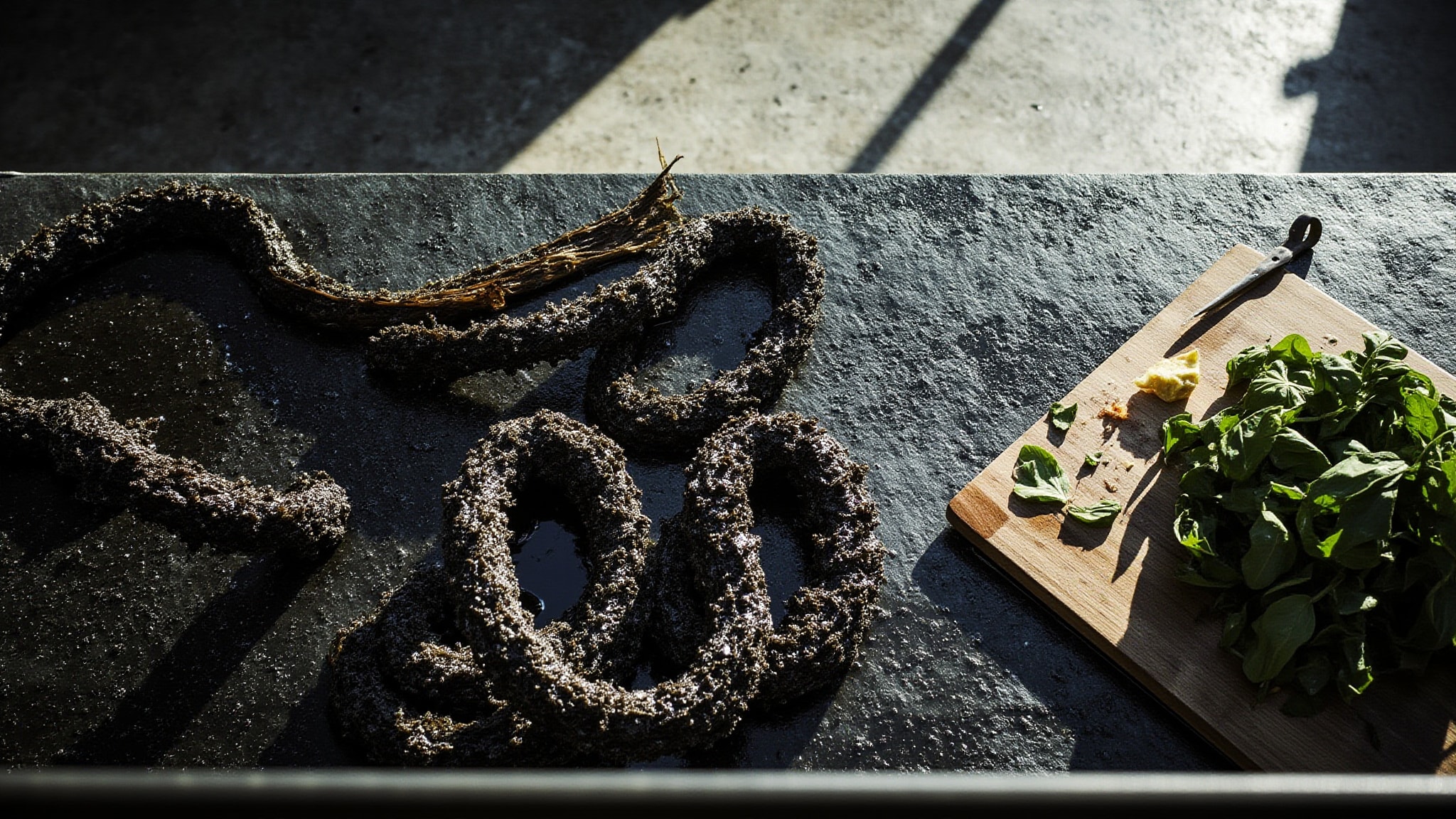
Seaweed absolute is rare in mainstream perfumery. Most aquatic fragrances rely on synthetic molecules that replicate the idea of the ocean without the thing itself. Lord of Goathorn uses the actual material, bringing an authentic marine quality to the composition, and pairs it with anise-heavy licorice. That's the combination that divides opinion. The herb-anis accord creates a distinctive tension that some find intriguing and others find challenging. It never fully resolves into something safe. It stays alive, slightly unresolved, and that's the point.
The evolution
The opening hits green and sharp, basil leading, tarragon following with that peppery anise edge. The seaweed comes in quickly, mineral and almost ozone-like, as if a cold coast just arrived in the room. The licorice begins its quiet takeover as the composition evolves. The marine notes don't disappear, they recede, becoming an undertone beneath the deepening anise. The heart is where Lord of Goathorn earns its reputation, becoming something darker and more complex as the herbs deepen. Then the drydown arrives. Here it softens, peaty, herbal, with a warmth that settles close to the skin. The sillage drops from projection to intimacy. It stays close for hours, a presence that lingers well after the first spray.
Cultural impact
Lord of Goathorn holds one of the most divisive ratings in the Lush portfolio. It projects hard and lasts long, which is why much of the feedback clusters around its intensity. For those who connect with it, it becomes transportive, one reviewer described smelling crab fishermen who've downed anise-licorice schnapps before docking. That's not typical fragrance language. Lord of Goathorn makes people reach for stories, which is rarer than it should be.
The House
LushLush is a British cosmetics company founded in Poole, England, in 1994 by trichologist Mark Constantine, his wife Mo Constantine, and five additional co-founders. The brand gained international recognition for its hand-pressed bath bombs, which Mo Constantine invented in her garden shed in 1989. Now operating in 49 countries, Lush has evolved from a single High Street shop into a global retailer while maintaining its commitment to ethical manufacturing and cruelty-free products. In-house perfumers Mark Constantine OBE, Emma Vincent, and Alina Gliwinska create the brand's fine fragrances, which are presented through the Perfume Library concept stores in Liverpool, Florence, and London. The fragrance collection spans over 230 perfumes dating back to 1989, organized into thematic volumes that serve as milestones in the brand's perfumery history.
The Creator
Simon ConstantineSimon favors single‑note focus, often building a composition around a pure absolute or essential oil. He pairs a dominant material with subtle supporting accents, allowing the star ingredient to breathe.