The Story
Why it exists.
The beginning
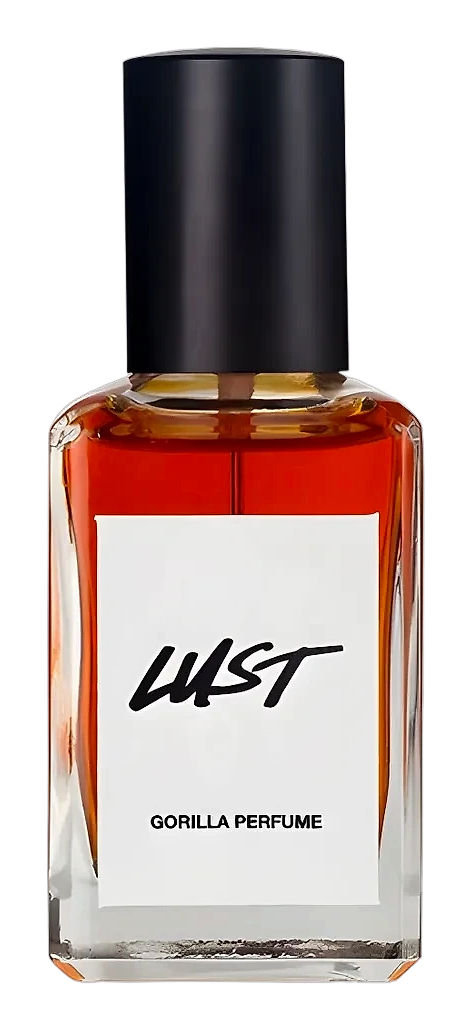
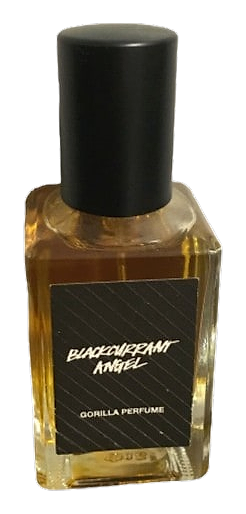
Blackcurrant Angel arrived in 2017 as part of Lush's Volume 4 range, a limited-edition collection built around the work of artist Hal Samples. The brief was simple: take the people and places he encountered wandering the streets of Dallas and turn them into scent. Samples had been exploring urban texture, the strangers you pass, the quiet energy of streets at different hours. Lush's in-house perfumer Simon Constantine translated that into something you could wear. Blackcurrant Angel was never meant for every shelf. It appeared at specific Gorilla Perfume events worldwide, then disappeared, the kind of fragrance you hunt for, not one that waits on a shelf to be discovered.
What makes this one linger in conversation: a blackcurrant paired not with the usual musk or vanilla suspects, but with osmanthus, a flower perfumers either love or overlook. It smells like apricot jam filtered through cold tea, with a honeyed edge that most fruity fragrances skip entirely. Guaiac wood is the anchor. Not cedar, not sandalwood. Guaiac has a smoky, slightly tar-like warmth that reads as woody but carries something almost medicinal underneath, a quiet complexity that makes the drydown feel earned rather than obvious. Three notes. No padding. The structure is almost defiant in its simplicity.
The evolution
It opens bright, blackcurrant that hits the skin with immediate tartness, the kind that makes your mouth pucker slightly. There's a green, almost stem-like undertone that fades early on, replaced by osmanthus stepping forward. The handoff is seamless. The berry doesn't disappear, it softens, becomes part of the background warmth while the floral takes the foreground. This middle phase lasts the longest, a long stretch of something that smells like a Sunday afternoon with nowhere to be. Then guaiac wood takes over. Slowly. The smoke rises, the sweetness of osmanthus fades, and what's left is dry, warm wood that stays close to the skin for a good while longer. On fabric, it lingers into the next day, a ghost of blackcurrant sweetness caught in a wool sleeve.
Cultural impact
Blackcurrant Angel emerged from the Gorilla Perfume division with a deliberately stripped-back structure. Unlike mainstream fruity perfumes that layer blackcurrant with musk or vanilla, this composition pairs the tart berry with osmanthus, a floral note that brings unexpected complexity to the fragrance. The limited-edition status tied to Volume 4 transformed it from mere fragrance into a collector's object, unavailable through standard retail channels and distributed primarily at Gorilla Perfume events.
The House
LushLush is a British cosmetics company founded in Poole, England, in 1994 by trichologist Mark Constantine, his wife Mo Constantine, and five additional co-founders. The brand gained international recognition for its hand-pressed bath bombs, which Mo Constantine invented in her garden shed in 1989. Now operating in 49 countries, Lush has evolved from a single High Street shop into a global retailer while maintaining its commitment to ethical manufacturing and cruelty-free products. In-house perfumers Mark Constantine OBE, Emma Vincent, and Alina Gliwinska create the brand's fine fragrances, which are presented through the Perfume Library concept stores in Liverpool, Florence, and London. The fragrance collection spans over 230 perfumes dating back to 1989, organized into thematic volumes that serve as milestones in the brand's perfumery history.
The Creator
Simon ConstantineSimon favors single‑note focus, often building a composition around a pure absolute or essential oil. He pairs a dominant material with subtle supporting accents, allowing the star ingredient to breathe.