    Home/Brands/Lohse

    Lohse

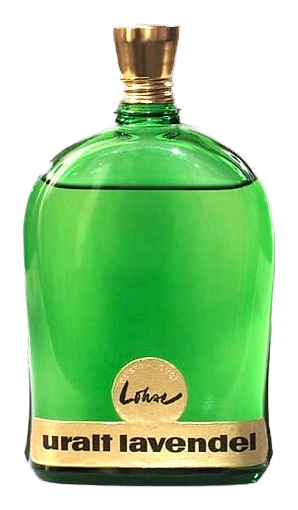
    Lohse is a historic German fragrance manufacturer whose lavender water, sold as Uralt Lavendel, became one of the most recognizable apothecary-style products of 19th- and 20th-century Berlin. Anchored in a single, enduring formulation, the brand is a touchstone of German pharmacy heritage, remembered for the distinctive packaging and singular ingredient philosophy that defined its production for nearly two centuries.

    GermanyEst. 1831
    1
    Fragrances
    4.3
    Avg rating
    Shop the collection
    SignatureUralt Lavendel
    Uralt Lavendel
    Community
    4.3
    Average rating
    across 1 fragrances
    Collection
    1
    Fragrances and counting
    Heritage
    1831
    Founded in Germany

    Most loved

    Bestsellers from Lohse

    All Lohse fragrances

    1 total

    1

    Heritage

    A house, in its own words

    Gustav Lohse founded the Lohse Company in Berlin in 1831, establishing a perfumery and toilet-water business in a city that would become one of Europe's major centers for cologne and scented waters during the 19th century. The company's most lasting creation, Uralt Lavendel (literally 'Old-Grain Lavender'), became a fixture of German household medicine cabinets and apothecary shelves, produced in the same spirit well into the 20th century. In 1913 the firm expanded by building a dedicated factory in Teltow, a town just southwest of Berlin, signaling the scale that the lavender water business had achieved over eight decades. The Teltow site served as the production heart of the company through both world wars and the postwar division of Germany, when Teltow fell in the Soviet occupation zone and later East Germany. Following reunification in 1990, production continued under the Lohse name from the same Teltow location, making it one of the few continuous German fragrance producers of Berlin provenance still operating from its original factory grounds. The longevity of the company, nearly two hundred years, places Lohse in a rare category of German personal-care manufacturers whose products outlasted the political transformations around them. Lohse's creative vision centers on continuity rather than reinvention. Where many fragrance houses expand into dozens of compositions over decades, Lohse built its identity around a small set of formulations, led by Uralt Lavendel, that were refined rather than replaced. This approach reflects the German apothecary tradition, in which a product's value rested on its consistency, its recognizability, and the trust regular customers placed in an unchanged recipe. The philosophy extends to the label itself, where the word 'Uralt' (old, longstanding) is not a marketing embellishment but a literal description of the formulation's age and the company's commitment to it. Sourcing and blending decisions appear to prioritize olfactory familiarity over novelty, a stance that aligns with the product's role as a family-staple lavender water used for linen, grooming, and minor skin care rather than as a statement fragrance.

    1831
    Gustav Lohse founds the Lohse Company in Berlin, producing perfumes and toilet waters including the early formulation of lavender water.
    1913
    Construction of the dedicated Teltow factory southwest of Berlin, expanding production capacity for Uralt Lavendel.
    1910
    Release (or relaunch) of '1910', a men's fragrance from the Lohse line referencing Berlin in the early 20th century.
    1945-1990
    Operations continue from Teltow through the postwar division of Germany, with the site falling within East German territory.
    Post-1990
    Following German reunification, Lohse continues lavender-water production from the original Teltow factory grounds.

    The noses

    Perfumers behind the house

    Did you know?

    Interesting facts

    01

    The brand name 'Lohse' survives on Uralt Lavendel bottles to this day, making it one of the longest continuously produced lavender waters of any single German house.

    02

    Lohse's Teltow factory, built in 1913, sat inside Soviet-occupied territory after 1945 and within East Germany after 1949, yet production reportedly continued across the Cold War divide.

    03

    Uralt Lavendel translates literally as 'Old-Grain Lavender', with 'uralt' being an emphatic German term for something longstanding, signaling the formulation's age at the time of its naming.

    04

    Lohse is one of several Berlin fragrance houses founded in the 19th century, alongside Schwarzlose (established 1856), making the city a once-major German center for cologne production alongside Cologne and Leipzig.