Heritage
A house, in its own words
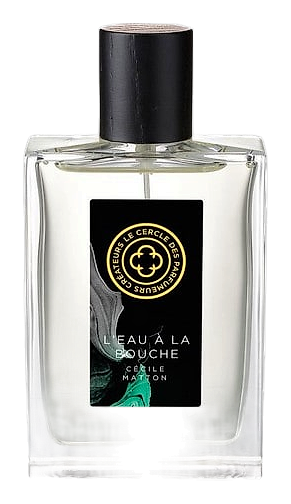
The International Circle of Perfumer-Creators emerged in response to a growing tension within the fragrance industry. As independent noses found it increasingly difficult to maintain creative control over their formulas after selling to larger houses, a group of established French perfumers formed the Cercle as a protective and promotional body. Raymond Chaillan, Maurice Maurin, Patricia de Nicolaï, François Robert, and Dominique [surname incomplete in source] appear as founding members of the organization. Patricia de Nicolaï, a graduate of the ISIPCA and daughter of Jean-Paul Nicolaï, brought particular credibility as a perfumer who had already established her own independent house in Paris. The organization's stated mission centered on defending the intellectual rights of perfumers and asserting their role as primary creative voices. Unlike trade guilds or commercial associations, the Cercle positioned itself as an artistic circle first. The timing coincided with a broader independent perfumery renaissance, as consumers began seeking out smaller houses offering transparent authorship and unconventional olfactive directions. The Cercle's heritage is therefore partly reactive: it exists because the mainstream industry failed to adequately recognize the perfumer as artist. Each release under the Cercle umbrella carries this institutional memory, functioning as both a fragrance and a statement about authorship. The group's limited output from 2013 to 2015 reflects the reality of independent creation: fewer releases, higher intentionality, and no obligation to follow seasonal release cycles imposed by commercial calendars. The Cercle operates from a fundamental premise that the modern fragrance industry has systematically obscured the human intelligence behind a bottle. Their philosophy treats each fragrance as a text authored by a specific individual, with a biography, an intention, and a point of view. This stands in direct contrast to the licensed fragrance model, where a celebrity or fashion house lends a name while in-house or contracted perfumers execute formulas anonymously. The Cercle argues for what might be called olfactory signature: the irreducible perspective of a trained nose applied to a specific creative brief. Their selection of Cecile Matton for L'Eau A La Bouche illustrates this. Matton chose a subject that could easily have descended into novelty: a boozy, minty gourmand referencing a cocktail rather than a classic olfactive family. The Cercle endorsed this choice because it served the narrative. The group's approach to fragrance extends to how they discuss ingredients. Rather than listing top, heart, and base notes in descending order of evaporation, the Cercle encourages associative descriptions that communicate the experience of wearing rather than merely owning. This philosophical stance informs everything from their stockist relationships to their public events, which are structured as dialogues rather than presentations.