The Story
Why it exists.
The beginning
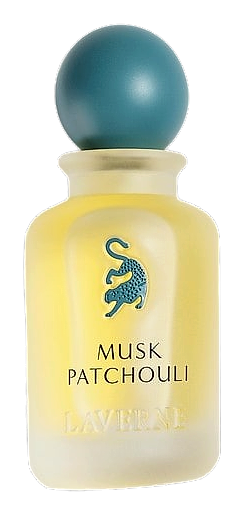
Laverne's fifth year brought a commission to Dominique Moellhausen: build something around the two most-debated materials in perfumery. Not to resolve the argument. To escalate it. Musk and patchouli sit at opposite ends of a spectrum, one that reads as intimate skin, the other as forest floor, dirty soil, the natural world pulled up by its roots. Most houses keep them apart. Laverne wanted to see what happened when you let them argue. The brief included white rose as translator. Saffron as punctuation. Vanilla as a floor to land on. The idea was tension without cruelty, warmth that earns its comfort.
What makes the structure work is the repetition of white rose across two tiers. It's top note and heart note simultaneously, which means the fragrance never fully leaves its floral identity even as patchouli's earth and musk's skin signature take over. Cinnamon doesn't announce spice, it flickers. Saffron adds a quiet metallic edge that keeps the sweetness honest. Vanilla in the base doesn't overwhelm; it absorbs. The composition succeeds because nothing dominates. Everything converses. Moellhausen's choice to repeat rose rather than layer it is a structural decision that keeps the fragrance coherent across its lifespan, open, settle, linger without ever becoming a different fragrance.
The evolution
The opening arrives with rose already cooled by powder, not fresh-cut, more like the memory of roses pressed into a book. Cinnamon barely registers as spice. It reads as warmth, a subtle glow against the skin rather than a sharp entrance. Within the first hour, musk moves forward. This isn't the sharp musk of synthetic opening, it's round, skin-like, the warmth of a pulse point. The patchouli enters quietly too, but it's the one that stays. Where everything else softens and recedes, patchouli deepens. By hour three, you're wearing earth and vanilla together, the forest floor finally surfacing, warmed by something sweet underneath. The drydown holds for another two to three hours on most skin: patchouli and vanilla in equal measure, musk still faintly present like a second skin. On fabric, it lingers longer. The next morning, there's a ghost of it, sweet, slightly woody, warm enough to make you reach for the bottle again.
Cultural impact
Musk and patchouli have a long history in perfumery that spans cultures and decades. These ingredients were originally used in traditional medicine and religious ceremonies before becoming cornerstones of modern fragrance. The 1960s and 1970s counterculture embraced patchouli as a symbol of rebellion, while musk evolved from animal-derived bases to sophisticated synthetic molecules that capture the same warmth without ethical concerns. Today, these notes represent a bridge between vintage charm and contemporary elegance. Perfumers continue to reinterpret this pairing, creating variations that appeal to both traditional fragrance lovers and new audiences discovering these timeless accords.