The Story
Why it exists.
The beginning
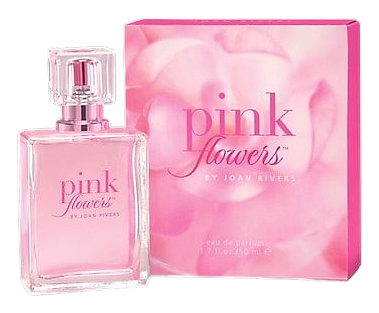
Pink Flowers arrived in 2004 as part of Joan Rivers' catalog of fragrances. Rivers had built a recognizable name across entertainment, and fragrance joined the list of formats attached to that identity. The floral variants in the range lean on accessible, readable names. Tuberose, Freesia, Black Lilac. And Pink Flowers, a title that makes no promises it can't keep. The composition draws from a classic floral-fruity-green template: a structure built around three distinct registers that share the stage rather than compete for it. Green notes provide the fresh opening lift, fruit adds sweetness through the top and heart, and florals carry the middle weight before settling into the base. The pyramid is straightforward, nothing layered or hidden, just a clean read of what the bottle contains.
What gives Pink Flowers its particular character is the green thread running through its core. The green accord acts as a backbone, giving the fruit a slightly bitter edge rather than letting it read as pure sugar. That structural choice keeps the scent from tipping into juvenile territory. The floral notes sit in the middle register, present but never heavy, letting the green and fruity elements carry the architecture. The balance between these three pillars is where the fragrance earns its appeal. The green doesn't shout, the fruit doesn't overwhelm, and the florals don't dominate.
The evolution
The opening arrives fast, almost before the spray settles. Green hits first, followed within seconds by the fruity sweetness pushing through like berries dropped into sparkling lemonade. The first ten minutes feel bright, almost effervescent. By the half-hour mark, the florals have settled in, taking the edge off the green while the fruit mellows from sharp to soft. This is where Pink Flowers spends most of its life, in that pleasant middle zone where nothing demands attention. The drydown is the quietest stretch. The green recedes almost entirely, leaving a soft floral-fruity skin scent that hovers close. No dramatic finale, no surprise twist. Just a gentle tapering into something warm and forgettable in the best possible way. The wear follows a clear arc: sharp and awake at the start, balanced and composed through the middle hours, soft and faded by the end.
Cultural impact
Pink Flowers arrived in 2004, joining a crowded marketplace of fruity-floral options aimed at women who wanted something pleasant and uncomplicated. Its name makes a straightforward promise, and the composition delivers on it without complication. The fragrance sits comfortably within the floral-fruity releases of its era, drawing on combinations that felt familiar to anyone who had browsed a fragrance counter in the years surrounding its launch. The category itself valued immediate likability, and Pink Flowers fits the mold without straining against it.