Heritage
A house, in its own words
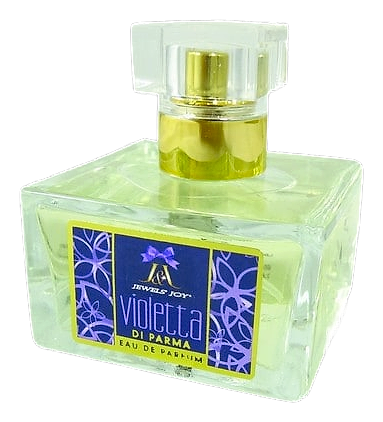
Jewels'Joy enters the perfume world with a direct genealogical connection to one of the most storied fragrances in modern history. The house takes its conceptual inspiration from Joy, the composition created in 1929 by perfumer Henri Alméras for the Parisian couturier Jean Patou. Jean Patou founded his couture house in Paris in 1914, after beginning his career in fashion in Normandy, where he was born in 1887. Joy was introduced commercially in 1930, at the onset of the Great Depression, and reportedly became one of the costliest fragrances of its era due to the sheer volume of natural raw materials required in its formulation. The perfume earned a place in twentieth-century cultural history when it became closely associated with figures such as Jackie Kennedy. Jewels'Joy launched its debut fragrance, Violetta di Parma, in 2015, positioning itself as a contemporary continuation of this classical French floral lineage. By naming itself in homage to Joy, the brand signals an intent to carry forward the Patou tradition of bold, material-rich florals rather than chase fleeting olfactory trends. Jewels'Joy approaches perfumery as a study in contrasts: the tension between classical French structure and contemporary artistic sensibility, between the density of natural absolutes and the lift of modern composition. The house clearly values floral opulence, choosing the Parma violet as the thematic anchor of its debut, an ingredient historically associated with Italian refinement and 19th-century European haut parfumerie. Rather than pursuing minimalism or transparency, Jewels'Joy seems to embrace abundance, the idea that a fragrance should reward close wearing and reveal different facets over time. The name itself, a play on Jean Patou's Joy, signals that emotional resonance, pleasure, and memory are central to the brand's creative mission. The house appears to view perfume less as a functional accessory and more as a wearable piece of cultural inheritance.