







Heritage
A house, in its own words
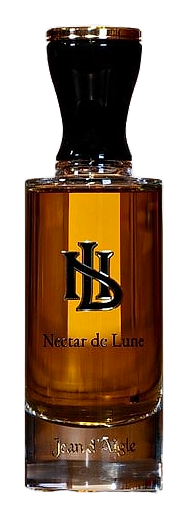
Jean d'Aigle traces its history to 1945, when Jean Soutter established the house in France and introduced Cologne Chypre. The original composition is presented as a meeting of Mediterranean, exotic and alpine scent associations, establishing the brand's enduring connection between chypre perfumery and changing natural landscapes. Rather than abandoning that founding language, the house has preserved the role of cologne as the center of its practice. Over more than seven decades, Jean d'Aigle continued producing eau de cologne through its classic, heritage and intense ranges, with sources describing the same traditional production process being maintained over time. The name Jean d'Aigle also draws on a deeper historical reference. Sources connect the name to the medieval French figure Jean d'Aigle, a court poet associated with the troubadour tradition, while some accounts of the house emphasize an imaginative vocabulary of legends, hidden rituals and sensory memory. These references sit alongside the documented founding date and founder, giving the brand a distinct identity rooted in French poetic history and the culture of fine perfumery. The house later expanded its vocabulary beyond Cologne Chypre. Accord Divin, Accord Vitalisant, Accord Ondin, Accord d'Éden and Accord Mystique reflect a broader exploration of accords, while newer releases such as Abysse Perdu, Souffle Céleste, Nectar de Lune, Dune Épicée and Terre Noire use evocative names to frame individual compositions. The precise dates and creators of these later releases are not consistently identified in the available material, so they are best understood as part of the house's continuing development rather than a fully reconstructed chronology. Jean d'Aigle's creative outlook combines the clarity of traditional cologne with a more poetic treatment of scent. The house describes itself as a perfumer-alchemist, a term that places composition at the intersection of technical formulation and imaginative storytelling. In practice, this appears most clearly in its fragrance naming. Names such as Souffle Céleste, Nectar de Lune, Dune Épicée, Terre Noire and Abysse Perdu evoke air, moonlight, desert, earth and deep water without reducing each composition to a literal place. The brand's collections suggest several ways of approaching perfumery. Classic and heritage categories preserve continuity with its cologne roots, while the intense line introduces a bolder register. A separate group of accords foregrounds the architecture of a fragrance, its structure and the relationships between material notes. This allows the house to move between familiar citrus and aromatic traditions and denser, more mysterious olfactory ideas. Nature is a consistent reference point, but the approach is interpretive rather than purely documentary. Provence appears in descriptions of the house's production environment, while the fragrances draw on Mediterranean, alpine, lunar, arid and oceanic imagery. The result is a brand identity that treats perfume as a form of atmosphere and memory. Its appeal lies in the tension between continuity and imagination: Jean d'Aigle keeps cologne central while allowing the house's newer compositions to explore myth, elemental landscapes and sensual abstraction.