


Heritage
A house, in its own words
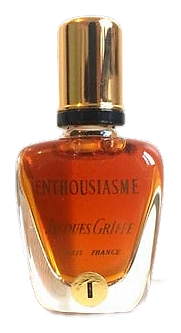
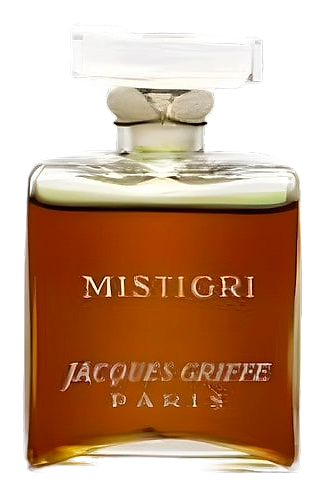
Jacques Griffe was established in Grasse by Jean-Jacques Griffe, a former employee of the A. Rallet perfume house, at the close of the 1940s. Grasse offered access to the region’s flower growers, essential-oil producers, and material suppliers, allowing the young house to build its identity around concentrated natural ingredients. Griffe’s first scent, Griffonnage, appeared in 1949 and quickly established the house’s chypre-floral style. It was followed by Mistigri in 1953, a warm floral fragrance centered on rose, and Enthousiasme in 1960, the first release in a numbered series that continued with Enthousiasme 2. During the 1960s and 1970s, Jacques Griffe expanded its collection with scents such as Grilou, introduced in 1957, while maintaining a close connection to Grasse and the wider perfume landscape of the Côte d’Azur. The house’s history places it within the classical French tradition, but its forceful concentration and rich blending distinguish it from lighter postwar styles. Later ownership and distribution shifted the brand beyond France, yet its core identity remained rooted in Grasse, structured floral compositions, and extrait de parfum strength. The chronology of Griffonnage, Mistigri, Grilou, and Enthousiasme reflects how Griffe developed a recognizable house style across nearly two decades. Jacques Griffe’s creative philosophy centered on the construction of rich, expressive fragrances rather than restrained minimalism. The house’s early work drew heavily on the classical French perfumery vocabulary, especially floral-chypre structures, rose-led warmth, spice, and resinous depth. Griffonnage presented a chypre-floral model that balanced freshness with a darker, persistent base, while Mistigri used rose and supporting floral notes to create a warmer and more enveloping effect. Griffe’s numbered Enthousiasme series extended that interest through successive compositions rather than treating each fragrance as part of a tightly unified lifestyle collection. This approach placed the character of the perfume and its evolution on the skin at the center. The house also favored high concentrations, reflecting the influence of extrait de parfum and the classic practice of building scented material through successive layers of top, heart, and base notes. Its Grasse origins shaped a practical ingredient culture centered on close relationships with growers and producers. The resulting style is best described as classic French perfumery with a dense, warm, and distinctly gendered presentation, favoring presence, diffusion, and duration over sheer transparency.