The Story
Why it exists.
The beginning
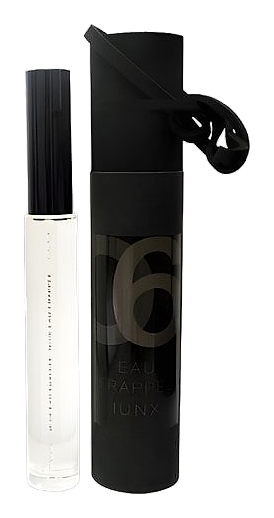
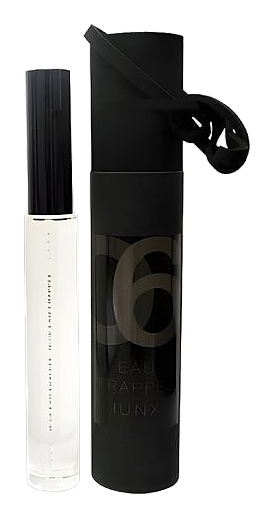
L'Eau Azteque arrived in 2003, part of IUNX's inaugural numbered series. Each scent in that launch represented a place, a texture, an element of the natural world distilled to its core. Azteque pointed toward Mexico, its flowers, its heat, its particular kind of brightness, but what Giacobetti actually translated was something more abstract: the tension between something delicate and something that bites back. The name sets an expectation. The composition subverts it.
The structural choice here is the point. Three materials, rose water, white pepper, ambrette seed, each doing something different, none dissolving into the others. Rose water brings clarity and a specific kind of floral transparency. White pepper introduces a dry, slightly metallic spice that interrupts the softness without overwhelming it. Ambrette seed, derived from musk mallow, delivers warmth and a subtle animal quality that grounds everything that came before. The accords (musky, powdery, fruity, animal) emerge from these three materials interacting, not from additional layers. It's a study in restraint: what happens when you trust three notes to carry a composition instead of seven.
The evolution
Rose water opens, pure, clean, almost distilled. The transparency is immediate and deliberate. Within minutes, white pepper arrives. It doesn't overwhelm the rose; it sharpens it, adds a quiet edge that prevents the composition from becoming precious. The transition from floral to floral-spicy is subtle, the kind of shift you notice more in retrospect than in the moment. Then the drydown: ambrette seed takes over, warm and musky and quietly animal. This is where the fragrance earns its name and its longevity. The animalic quality in ambrette isn't aggressive, it's the kind of warmth that reads as skin-like, intimate, close. Lasts several hours on most skin types, with the musk settling close to the body rather than projecting outward. The rose doesn't disappear entirely; it stays beneath the ambrette, a quiet presence threading through the drydown.
Cultural impact
L'Eau Azteque occupies an interesting position in the Giacobetti catalog, it's one of her most stripped-back compositions, a deliberate counter to the richer work she's known for. The rose-and-pepper combination reads as a signature move, executed here at its most austere. Worn by those who find her work with L'Artisan Parfumeur too dense, or as a gateway into her particular brand of minimalism.