The Story
Why it exists.
The beginning
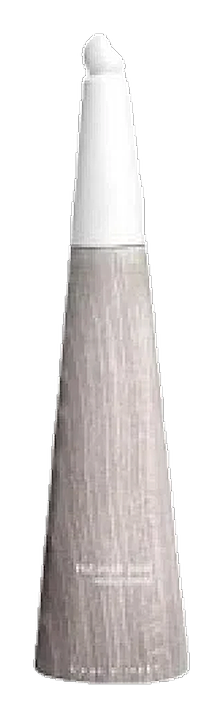
Issey Miyake has built much of its fragrance identity on the tension between nature and structure, and L'Eau d'Issey Fleur de Bois, conceived in 2010, extended that narrative in a deliberate new direction. The original L'Eau d'Issey drew its power from aquatic and marine accords, a liquid metaphor for the brand's philosophy of innovation through simplicity. By 2010, Issey Miyake needed a fragrance that could step away from water without losing that sense of natural clarity. The brief fell to Jacques Cavallier-Belletrud, who was tasked with translating the brand's minimalist Japanese sensibility into a woody-floral vocabulary. Rather than reaching for safe aquatic florals, Cavallier-Belletrud anchored the composition in cedarwood from the very first moment, making a quiet but confident statement about what this extension of the L'Eau d'Issey lineage was meant to be.
The note philosophy in Fleur de Bois treats cedarwood not as a base note but as a structural heart, an unusual choice that gives the fragrance a different kind of depth than typical woody florals. The pairing of cedar with mimosa and freesia creates an unlikely harmony: the dry, almost pencil-shaving quality of cedar against the cool, powdery softness of mimosa produces a tension that feels intentional rather than accidental. Amber provides the warmth that prevents this tension from becoming uncomfortable, acting as a bridge between the wood and the florals in a way that feels almost architectural.
The evolution
The composition opens without ceremony or transition, placing cedarwood firmly in the foreground as though it has always been there. There is no top note preamble here; the fragrance makes its woody intent clear from the start. Within the first thirty minutes, Freesia and Mimosa begin to soften the cedar's edges, introducing an airy, powdery quality that feels cool and almost abstract in its sweetness. Rose arrives quietly, weaving a subtle counterpoint through the wood rather than standing atop it, preventing the cedar from becoming austere. Amber acts as the warm connective tissue between the florals and the wood, adding resinous depth that keeps the composition from feeling cold or overly linear. By the mid development, the cedar-floral balance is fully established, with each note occupying its intended space. The drydown is not a dramatic transformation but rather a gentle settling, the florals receding at their own pace while cedar and amber continue to define the composition in a quiet, lasting finish.
Cultural impact
When L’Eau d’Issey Fleur de Bois arrived in 2010, it entered a market increasingly interested in clean, aquatic‑floral scents that could transition from day to evening. Its emphasis on freesia and cedar resonated with a generation seeking understated elegance without overpowering intensity. The perfume quickly became a staple in boutique selections across Europe and Asia, influencing subsequent releases that favored a balance of airy top notes and warm woody bases. Over the past decade, it has been cited in numerous style guides as a go‑to scent for professionals who appreciate a refined, nature‑inspired profile, reinforcing Issey Miyake’s reputation for timeless, water‑centric compositions.