
The Story
Why it exists.
The beginning
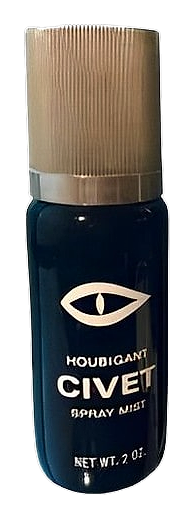
Houbigant launched Civet in 1973, and the choice of name was the choice itself. No poetry, no euphemism, no careful rebranding of an awkward ingredient into something prettier. Just Civet, printed on the bottle exactly as it appears in the composition. The fragrance takes its name from the civet note that anchors the entire structure, and everything else in the bottle, the powdery amber, the supporting warmth, exists in service of that single material. It reads as an honest label for an honest juice. Nothing dressed up, nothing hidden behind marketing language. The bottle said exactly what was inside, and what was inside was civet, full stop.
What makes this composition distinctive is the commitment to its central material. Civet by Houbigant is built around the note rather than around it, letting the animalic material carry the structure while powdery amber supports underneath. The result is a scent that smells like the raw ingredient, not a diluted memory of it. For collectors and enthusiasts of vintage animalic compositions, this kind of unapologetic focus is rare.
The evolution
The opening hits before the fragrance has even warmed on skin. There's an unmistakable animalic heat, the signature of natural civet, wrapped in a powdery amber haze. It doesn't ease you in. The first impression is confrontational, a direct statement of what the fragrance is and what it contains. As the composition settles, the harshest edges start to soften. The civet moves from sharp and pungent into something rounder, muskier, more intimate in feel. The amber gains prominence, and a creamy, almost vanillic warmth begins to surface underneath, layering beneath the civet rather than covering it. Over time, the scent transforms into a close-skin animalic musk that clings with persistence. The powdery quality remains throughout, giving the drydown a vintage, almost cosmetic feel that tempers the rawness without ever fully neutralizing it.
Cultural impact
Civet by Houbigant occupies a specific niche: vintage animalic compositions from the early 1970s. The fragrance is discontinued, which has shifted its status from commercial product to collector's item. For enthusiasts of raw, unapologetic animalic perfumery, it represents an approach that's increasingly rare in modern releases, where compositions tend to soften their more challenging notes or bury them under layers of synthetic construction. The formula takes a different path, one where the civet note is the headline rather than a hidden ingredient.