






Heritage
A house, in its own words
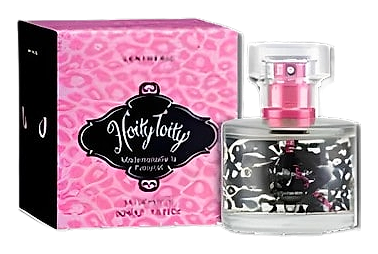
Hoity Toity belongs to the French fragrance house Lentheric, a company whose documented history in perfumery extends back over a century, with origins situated in Paris. Lentheric became one of the recognizable names in European fragrance during the late 19th and 20th centuries, building a catalog that spanned florals, orientals, and lighter everyday compositions. The Hoity Toity line itself emerged in 2004, when a cluster of fragrances including Lola, Bon Bon, the original Hoity Toity, Cherie, Miss Priss, Belle de Luxe, and La Di Da were released together, signaling a deliberate move toward younger, novelty-oriented naming within the parent brand's portfolio. The 2009 launch of Mademoiselle la Pussycat and the 2011 arrival of ChouChou! extended that direction. While the original Lentheric house carries deep French roots, the Hoity Toity sub-brand reflects a more modern, playful extension rather than a continuation of the house's earliest classical compositions. Independent coverage of Lentheric and its sub-brands remains limited, and specific details about the creative leads behind the 2004 launch cluster are not well documented in publicly available sources. What is clear is the connection to a French parent house with a century-plus lineage, and the positioning of Hoity Toity as a youthful counterpoint within that lineage. The Hoity Toity line reads as a deliberate departure from the gravity often associated with classical French perfumery. Naming conventions like Bon Bon, Cherie, Miss Priss, and Mademoiselle la Pussycat signal a creative philosophy rooted in playfulness, character, and approachability rather than solemn luxury. The line appears to target a demographic that values personality and lightheartedness in scent, offering fragrances that function as wearable mood pieces. Where many heritage houses emphasize restraint, timelessness, and coded sophistication, Hoity Toity leans into overt charm, pet-named whimsy, and the kind of self-aware femininity that invites a smile. This positions the collection as an accessible, emotionally lighter entry point connected to but distinct from the more formal traditions of its parent house, Lentheric.