
The Story
Why it exists.
The beginning
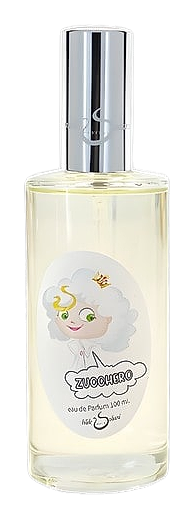
Zucchero is the simplest brief in the lineup: one ingredient, one name. No prefix, no metaphor. Just the thing itself. In a collection often associated with richness and complexity, this fragrance takes a different approach, stripping the playbook back to a single note and asking what sugar can do when it has nothing to hide behind. The concept is pure and crystalline, sugar in its most essential form, catching light before dissolving on skin. The structure around it is deliberate, clean lines that let the sweetness breathe without becoming overwhelming. What remains is a study in restraint, sugar as a considered choice rather than an afterthought, proving that a single note can speak loudly when everything else falls silent.
The challenge with sugar in perfumery is that it's a texture as much as a note. Too much and the composition turns sticky, cloying, one-dimensional. Too little and it disappears entirely. Soliani's solution was to build a structure that holds sugar at its center while the supporting materials, citrus brightness, powdery warmth, a soft vanilla backbone, do the work of keeping it graceful. The result performs like a fragrance with a full pyramid while technically reading as a single-note concept. Community wearers report it smelling like pink cotton candy dusted with lemon, settling into a powdered sugar finish that lingers close to the skin.
The evolution
The opening announces itself immediately, bright, sweet, the kind of sugar that feels almost aldehydic before it settles. There's a citric lift in the first minutes, a clean brightness that stops the sweetness from becoming syrup. As time passes, the texture shifts. The heart becomes powdery, soft, like vanilla flour mixed by hand, the warmth of confectionery without the sticky residue. By the second hour, the sillage moderates, it stops announcing itself and starts inviting. The drydown is where Zucchero earns its name. Powdered sugar on warm skin. Close and intimate, with a faint lemon that refuses to fully disappear. On fabric, it can linger into the evening.
Cultural impact
Sugar notes have existed in perfumery for decades, moving through phases of popularity and restraint. Some compositions leaned into syrupy excess, heavy on sweetness and long on projection, and that approach eventually wore out its welcome. The pendulum swung toward restraint, toward minimalism, toward anything that could stand in contrast to sweetness. Now sugar has returned with cleaner execution, stripped of the syrupy excess that once defined the category. Zucchero arrives in that moment, offering confectionery sweetness without the stickiness, powder without the cloy.