
The Story
Why it exists.
The beginning
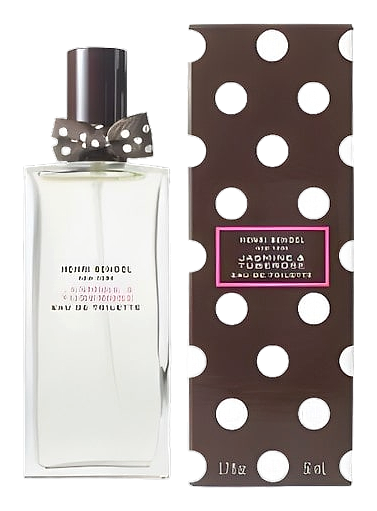
Henri Bendel's private-label fragrance collection was built on a specific premise: refined scent shouldn't require a specialist's vocabulary to appreciate. The 2004 Jasmine & Tuberose embodies that approach. Rather than leaning on exotic materials or complicated structures, this composition isolates three notes, jasmine, tuberose, rose, and lets them speak directly. The result is a fragrance that rewards attention without demanding expertise. Henri Bendel designed these scents as introductions to what white florals could do, inviting discovery over intimidation.
What makes this trio interesting is the interplay between indolic jasmine and creamy tuberose, held together by rose's quiet structural role. The animalic note some wearers detect isn't a flaw, it's the honest scent of these flowers in full bloom, the slightly feral quality that disappears in heavily processed alternatives. This isn't a reconstructed approximation of white florals. It's an attempt to capture them as they actually smell, green stems and all, before perfumers learned to sand down the edges.
The evolution
The first minutes belong to jasmine, green, slightly heady, with the indolic kick that signals authenticity. Within ten minutes, the tuberose swells. Creamy, lush, almost narcotic in its fullness. The rose doesn't announce itself. It arrives gradually, softening the tuberose's edges and pulling the composition toward powder without ever fully arriving there. By the second hour, the animalic undertone emerges, not skatole's explicit intensity, but a warm, skin-adjacent presence that makes the drydown feel worn rather than applied. On fabric, the white florals persist into evening. On skin, the warmth lingers for hours afterward, quieter but unmistakable, the ghost of something that was, once, in full bloom.
Cultural impact
The Henri Bendel fragrance collection, including Jasmine & Tuberose, represents a particular moment in American retail beauty, fragrances developed not to compete with European houses but to offer accessible interpretations of premium olfactory experiences. The 2004 launch found its audience among women who wanted white florals without the complexity of niche compositions.