The Story
Why it exists.
The beginning
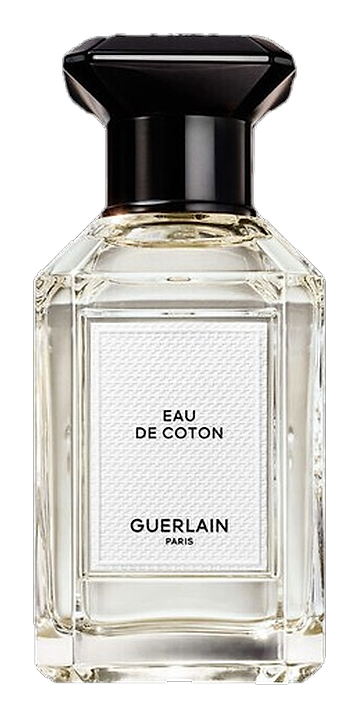
In 2021, Thierry Wasser reached for something essential. The Les Eaux collection had always been about restraint, fragrance as daily ritual, not statement. Eau de Coton (Cotton Water) distills that philosophy into its purest form. The name itself is a declaration: not grand, not complicated. Just the softness of fabric, the comfort of routine, translated into something you can wear. Wasser worked with the tension between freshness and warmth, how to keep citrus from going sharp, how to make cotton flower feel luxurious instead of clinical. The answer lived in the balance: bergamot bright enough to open, almond creamy enough to hold.
What makes Eau de Coton interesting isn't any single note, it's the structure. The top doesn't announce; it breathes. Bergamot and lemon arrive as a whisper, not a declaration. Then the heart takes over: cotton flower, orange blossom, and almond creating a powdery, lactonic warmth that feels less like perfume and more like skin. The base amplifies that intimacy, white musk and vanilla working together to make the fragrance feel like it's always been there, just underneath. This is the Guerlain approach to minimalism: not absence, but presence.
The evolution
The opening lasts about fifteen minutes, bergamot and lemon dancing in a bright, sparkling register before the heart begins its slow take-over. Cotton flower and orange blossom arrive quietly, weaving together with almond's creamy sweetness. The transition isn't dramatic; it's a handoff. By the second hour, the citrus has receded completely, and what remains is warm, powdery, close. The white musk asserts itself, creating something that smells less like fragrance and more like skin, the scent of warmth and fabric and comfort. The drydown holds for 6-8 hours on most skin, staying intimate and close. On fabric, it lingers longer, the next morning, a faint trace of vanilla and clean cotton remains.
Cultural impact
Eau de Coton enters a lineage of skin-close fragrances that prioritize comfort over spectacle. In a market that often rewards projection and longevity as markers of quality, Guerlain stakes a different claim: presence without noise. The Les Eaux collection has always attracted those who understand that restraint is its own form of luxury. Wearers describe it as the fragrance of someone who walks into a room and doesn't need to announce themselves, a quiet confidence that reads as earned, not performed.
The House
GuerlainGuerlain stands as one of the oldest and most revered perfume houses in the world, founded in Paris in 1828 by Pierre-François-Pascal Guerlain. What began as a boutique on rue de Rivoli quickly became the preferred destination for Parisian society, attracting dandies and elegant women who sought custom-crafted fragrances. The house's influence grew to such heights that Guerlain earned the title of Official Perfumer to Napoleon III after presenting Eau de Cologne Impériale to Empress Eugénie as a wedding gift in 1853. This royal patronage marked the beginning of Guerlain's enduring association with European aristocracy, as the house went on to create fragrances for Queen Victoria and Queen Isabella II of Spain. Today, under the creative direction of Thierry Wasser, the fifth-generation perfumer, Guerlain continues to shape the landscape of fine fragrance with a portfolio spanning over 1,100 olfactory creations. The house remains headquartered at its legendary Champs-Élysées mansion, a historic monument that anchors Guerlain's position at the intersection of heritage and contemporary luxury.
The Creator
Thierry WasserWasser gravitates toward green, crispy notes and the bold florals Guerlain is known for. Bulgarian rose appears repeatedly in his work, and he travels annually to oversee the harvest in Kazanlak.