Heritage
A house, in its own words
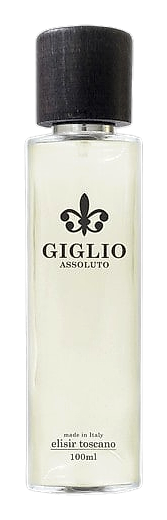
Giglio’s documented fragrance history is compact. The perfume encyclopedia record places its catalogue debut in 2018 with Assoluto, a work attributed to Arturo Landi. That release becomes the starting point for tracing the house’s development, because the supplied sources do not establish an earlier founding date, founder, original location, or a sequence of milestones before that year. The name Giglio also carries a clear Italian linguistic association, with “giglio” meaning “lily” in Italian, a detail that fits the country’s culture of naming fragrances and fragrance houses with concise, recognisable language. The wider historical context is substantial. Fragrance-making in Italy belongs to a European tradition that includes the pioneering eau de cologne formula introduced in Cologne by Johann Maria Farina in 1709 and the Florentine house Santa Maria Novella, whose roots reach back to 1221. Those comparisons place Giglio within a mature continental lineage of citrus-led perfumery, while offering a different point of origin: a contemporary house whose first well-documented fragrance appeared in 2018. Because the available research does not corroborate additional dates or biographical details, the safest account of Giglio’s heritage begins with its catalogue entry and treats the house’s current identity as defined by Assoluto. Giglio’s creative approach can be read through Assoluto and the format it represents: fragrance as a refined, concentrated expression of a clear idea. The 2018 release arrived at a moment when classical eaux de cologne remained influential, drawing on the category’s historic emphasis on citrus brightness, aromatic lift, and freshness. Rather than relying on an unverified manifesto, the house’s philosophy is best described through this formal context. Its small documented catalogue gives each release room to function as a distinct olfactory statement rather than part of a large collection built around constant expansion. The attribution to Arturo Landi adds a human craft dimension to that identity, though the supplied sources do not describe his inspiration, compositional method, or intended wear. Giglio’s Italian name suggests an affinity for direct, elegant language, while the association with lily offers a soft floral reference that sits naturally beside citrus and herbs. In practical terms, the house appears to value clarity of idea, classical fragrance codes, and a restrained catalogue presence. These qualities shape how Assoluto should be encountered, as a specific composition from a contemporary Italian house, not as an unexplained trend or a product supported by generic promotional claims.