Heritage
A house, in its own words
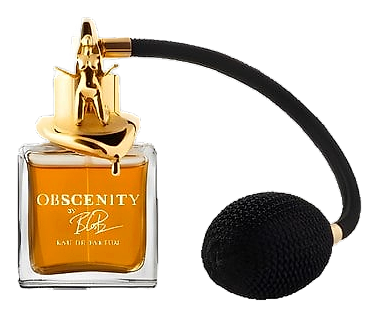
Bruce LaBruce, born in Toronto, is a graduate in Film Studies from York University. He co-founded J.D.s, the fanzine widely cited as the original manifesto of the queercore movement, alongside filmmaker G.B. Jones. The fanzine launched in 1987 and gave LaBruce a platform to develop the confrontational style that would later define his feature work. He went on to direct films including No Skin Off My Ass (1991), Hustler White (1996), and The Raspberry Reich (2004), becoming known for raw, sexually explicit narratives that drew comparisons to John Waters while carving out their own distinct lineage. The leap into fragrance came from a practical observation: LaBruce noticed that artworks he shipped back from international exhibitions arrived carrying the scent of their packaging materials. This realization prompted him to consider the olfactory dimension of artistic objects. The etymology of the word "obscenity" contains "scent" within it, and LaBruce seized on that linguistic coincidence as the conceptual seed for his perfume. Obscenity Parfum launched in 2014, marking his first major venture outside film and photography. LaBruce directed a commercial for the fragrance in Hamburg, featuring performers Katja-Inga Boldowski and Dwayne Strike, embedding the product firmly within his established visual language. LaBruce has spoken about Obscenity as the realization that scent and obscenity are etymologically entwined, and he treats that discovery as a conceptual starting point rather than a marketing gimmick. The fragrance functions as an extension of his cinematic and photographic work, where the body, sexuality, and provocation are recurring visual languages. In interviews he has discussed fragrance in terms tied to memory, attraction, and transgression, framing scent as something that can carry an artist's sensibility without words. The brand treats perfume less as a luxury good and more as an art object with a point of view. LaBruce's queercore roots inform an approach that resists mainstream fragrance conventions: there is no aspiration to broad commercial appeal, no smoothing of edges for mass accessibility. The philosophy is closer to that of an independent artist releasing a limited edition print than a traditional beauty house. Obscenity is positioned as wearable ideology, a wearable provocation that shares the confrontational honesty of LaBruce's films. The result is a fragrance that asks the wearer to participate in something deliberately transgressive rather than simply smell pleasant.