



Heritage
A house, in its own words
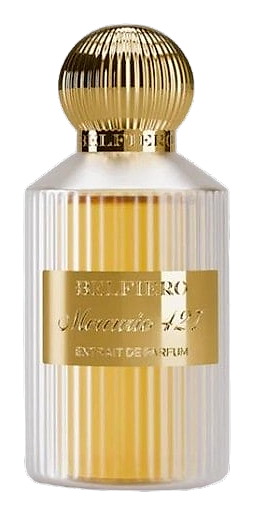
No reliable founding date, founder or location for Belfiero was identified in the supplied research. The available material concerns the broader history of Italian and European perfumery rather than the brand's own story, so it would be misleading to present those histories as Belfiero's heritage. The house's name and listed fragrances do suggest a contemporary Italian framing. Tramonto Venere, Anelli di Saturno and Onda Solare use celestial, meteorological and classical references, while Mercurio 427 combines the planet Mercury with a numerical code. These names create a sense of narrative, but they do not establish how long the house has operated, who established it or whether the fragrances were created in Italy. That distinction matters in a category where heritage is often communicated through visual language before a documented timeline is available. A credible Belfiero history would need confirmation from company records, interviews with its founder or perfumers, dated product announcements and independent coverage. Until those sources appear, the safest account is that Belfiero presents itself through Italian naming and a contemporary collection, with its institutional story still requiring verification. Belfiero's clearest creative signal comes from the names of its fragrances. Tramonto Venere, meaning a Venetian sunset, frames scent through atmosphere and place. Mercurio 427 sounds more cryptic, pairing a planetary name with an alphanumeric detail. Anelli di Saturno, the rings of Saturn, and Neve Stellare, stellar snow, extend the range into a celestial vocabulary, while Onda Solare, a solar wave, shifts toward warmth and radiance. Together, these titles suggest that the house prefers evocative concepts over straightforward descriptions of ingredients. The philosophy appears to begin with a strong image, then invite the wearer to interpret how that image becomes olfactory. This approach can make discovery feel editorial, since each fragrance represents a distinct emotional register rather than a close variation on one signature. The supplied research does not identify Belfiero's founder, creative director or perfumers, so claims about intentionality cannot be confirmed. Nor do the references establish a particular sourcing standard, sustainability commitment or formulation brief. What can be said with confidence is that the naming system gives Belfiero a coherent conceptual world, one that balances Italian references with science-like codes and otherworldly imagery.