


Heritage
A house, in its own words
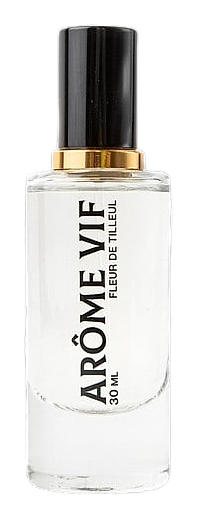
Arôme Vif belongs to the lineage of House of Houbigant, whose story begins in 1775 when Jean-François Houbigant, born in 1752, launched a perfume business at 19 Faubourg Saint-Honoré in Paris. That address places the company’s origin in the Faubourg Saint-Honoré, a district closely associated with the development of French fragrance commerce. The house has remained active across four centuries, with its name surviving through changes in fashion, ownership, and perfume conventions. Much of what is known about the company’s early history comes from the House of Houbigant’s own institutional account, so claims beyond the founding date, founder, and location should be treated cautiously unless supported by independent material. The research presented here does not separately identify when the Arôme Vif name was adopted, nor does it explain the relationship between the contemporary label and the historic Houbigant house in precise legal or commercial terms. What can be established is the continuity of setting and context: Arôme Vif’s recent releases emerged from a Parisian perfume lineage whose roots reach back to the late eighteenth century. The early releases listed for the label, Mon Capitaine, Douce Insouciance, Fleur de Tilleul, and Cœur des Eaux du Nord in 2022, followed by Tentarise in 2023, mark a concentrated period of new work. The progression shows a house assembling a distinct contemporary collection without leaning on a single launch year as its identity. Rather than presenting Arôme Vif as a newly invented name with no historical frame, its story begins with an established French perfumery culture and moves into present-day composition. Arôme Vif’s creative direction can be read through its naming. “Vif” means lively, immediate, and full of movement, while the collection’s titles evoke people, moods, plants, and imagined places. Mon Capitaine suggests character and devotion. Douce Insouciance combines tenderness with carefree ease. Fleur de Tilleul names a floral motif directly. Tentarise carries a more abstract, tension-filled note, and Cœur des Eaux du Nord suggests a heart shaped by northern waters. Together, they imply that perfumery should create a distinct emotional and sensory space, not merely decorate the wearer. The label appears to favour variety with a coherent signature: expressive naming, poetic French titles, and the historical resonance of Parisian perfumery. This philosophy sits naturally within House of Houbigant’s broader story, which begins in 1775 and extends across four centuries. The supplied research does not provide specific statements from Arôme Vif’s founders about artistic process, and no perfumers are linked to the fragrances in the available records. It would therefore be misleading to attribute a formal manifesto or detailed methodology to the house. Still, the collection itself offers a clear creative proposition. Its language moves between companionship, lightness, flowers, elemental imagery, and emotional contrast. Such naming choices encourage fragrance to be considered as a narrative experience, one capable of suggesting a person, a season, or an atmosphere. Arôme Vif’s approach is therefore best described as poetic and image-led, with contemporary releases rooted in the vocabulary of French fragrance culture.