The Story
Why it exists.
The beginning
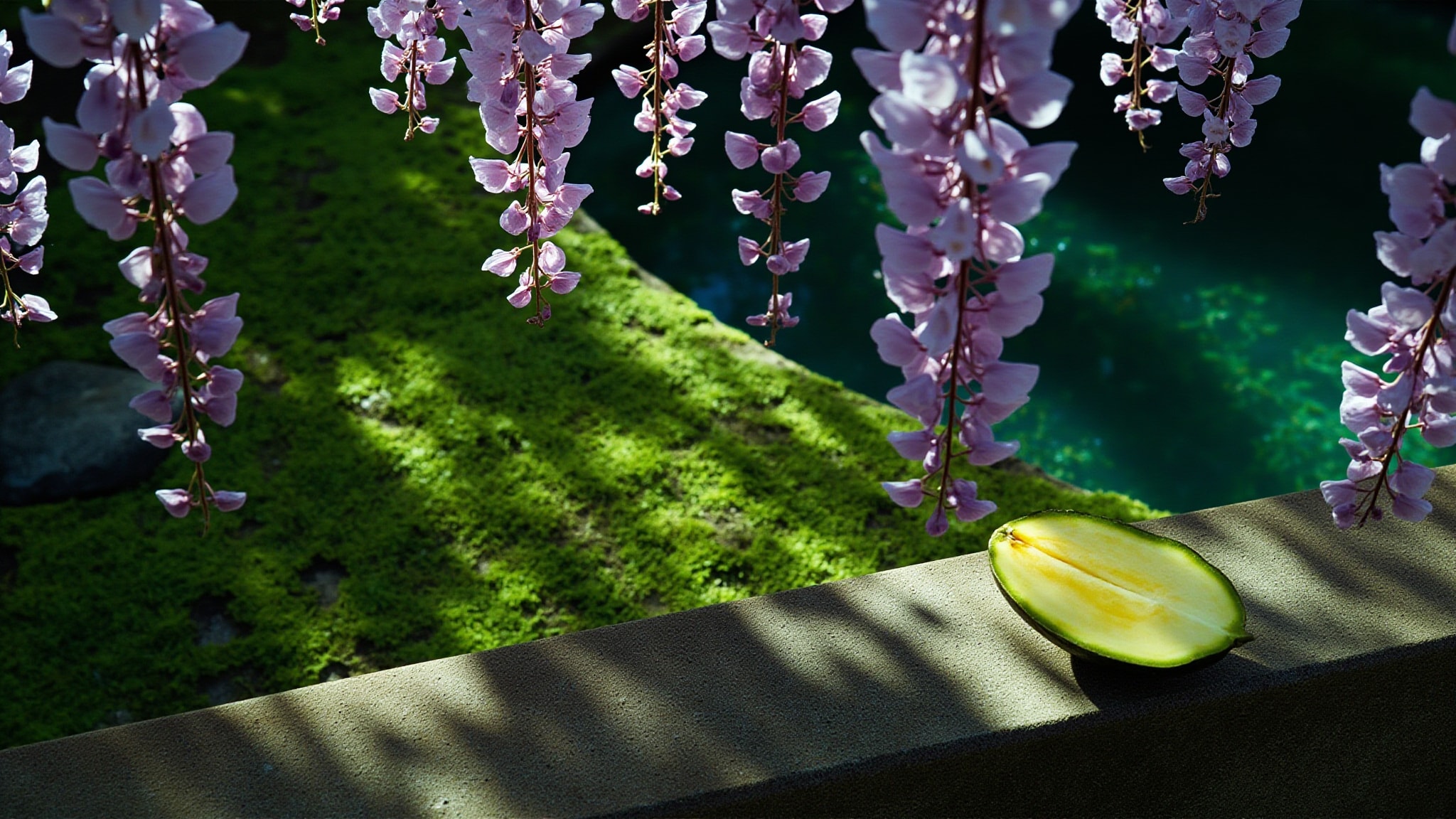
In the Shade of Wisteria Blooms takes its name from the cascading purple blooms that frame traditional Japanese gardens in late spring. Sharra Lamoureaux was drawn to the paradox at the garden's edge, where romantic florals meet grounded greenery. The result is a fragrance that captures the damp stone path, the cooling shade beneath flowering vines, and the contemplative quiet of a space where nature is both wild and tended. Less about novelty. More about a specific atmospheric moment that lingers.
What makes this composition unusual is its willingness to place celery, an ingredient most perfumers avoid, alongside delicate wisteria. Rather than competing, the savory herbal note lifts the floral, keeping it grounded in something real. The cucumber adds moisture without aquatic excess, and the Black Dragon pearl tea brings a slightly smoky, fermented depth that prevents the whole thing from reading as purely decorative. Hokkaido lavender adds a cooler, less sweet facet than its Provençal cousin. Together, these materials create a scent that feels authentically garden-like rather than generically fresh.
The evolution
The opening arrives cool and almost wet, cucumber's moisture, white celery's herbal bite, a whisper of lavender threading through. Wisteria doesn't burst in. It builds. Slowly, like purple clusters taking shape over a garden wall. By the heart phase, the floral is fully present, supported by coriander's faint spice and a Black Dragon tea note that adds quiet, almost smoky depth. The drydown is where restraint pays off, a lingering green-herbal accord with faint floral sweetness, the tea's smokiness fading to something close to skin but distinctly present. Despite its airy character, the scent maintains its presence throughout wear, the herbal base providing a steady foundation that grounds the delicate florals as the hours pass.
Cultural impact
This fragrance fits comfortably within Alkemia's tradition of atmospheric storytelling, compositions that evoke specific places and moments rather than generic mood categories. The Japanese garden aesthetic carries cultural weight, a space of contemplation where cultivated and wild exist in harmony. What distinguishes this scent is its unusual herb-and-green architecture supporting the floral heart, a deliberate choice that sets it apart from more conventional fragrance structures. The house has built its reputation on exactly this kind of sensory specificity, and this composition exemplifies that approach.