The Story
Why it exists.
The beginning
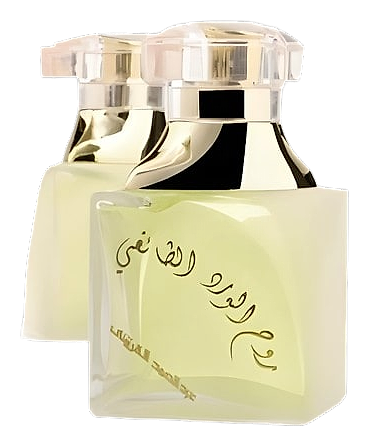
Rouh El Ward Al Taifi centers on a single, towering fixation: Taif rose absolute, concentrated until it becomes less a note than a substance. The composition builds everything around that obsession, treating the rose not as a floral accent but as the entire architecture of the wear. There's a density to the oil that reads almost edible at first contact, a candied warmth that suggests rose petals macerated in honey rather than the airy, dewy rose most Western perfumery offers. As it settles, the sweetness pulls back slightly, and what remains is a dark, slightly bitter, woody undertone that gives the bloom a serious, adult weight. This isn't rose as decoration or background.
What makes this composition stand apart in the rose category is its sheer concentration. A reviewer described the equivalent of roughly 12,000 rose blooms per bottle, a claim that sounds hyperbolic until the oil meets skin and that density proves itself. On application, the rose arrives almost overwhelming in its richness, a syrupy, jammy opening that has nothing of the fresh-cut-flower quality of lighter rose fragrances.
The evolution
Rouh El Ward Al Taifi descends from the Arabian tradition of distilling rose harvest into concentrated attar oils, a format where the raw material takes precedence over blending artistry. Abdul Samad Al Qurashi built its house identity on material-driven compositions, and this piece distills that lineage into a single-note meditation on Taif rose absolute with an oriental base providing quiet warmth beneath the bloom. The composition reads as a heritage piece the moment it touches skin: dense, intimate, polarizing, and unmistakably rooted in pre-Western perfumery practice. The opening hits with a candied, almost overwhelming richness, rose petals rendered into something closer to preserve than perfume, before settling into its darker, more resinous middle phase.
Cultural impact
Rouh El Ward Al Taifi sits in a category of its own: the concentrated rose attar that demands a different relationship between fragrance and wearer. A reviewer described applying it as a ritual oil, dabbed sparingly rather than sprayed, and that application method reveals something about the format's intention. This is rose for people who find most rose fragrances too polite, too sweet, too far from the actual plant. The concentration reads as a deliberate rejection of the delicate, the airy, and the crowd-pleasing, offering instead an experience built on density, darkness, and the kind of seriousness that rewards attention.