Marius Reboul
Marius Reboul (1873-1952) built his reputation in the laboratories where twentieth-century French perfumery took shape. He began his career as a chemist at Chanel's fragrance laboratory, working in the technical trenches at a moment when the house was redefining how modern women smelled. From there he moved to Jean Patou, where he became the in-house perfumer responsible for some of the most exacting compositions of the interwar years. Reboul's tenure at Patou coincided with a golden age of couture fragrance, and his rigorous methodology earned him the quiet respect of rivals who rarely said so aloud. He later joined Givaudan, where he played a foundational role in developing the specialty bases and aroma chemicals that still underpin much of contemporary perfumery. Though his name rarely appears on consumer bottles, industry veterans treat his influence as structural rather than superficial. One documented creation, Rigaud's Un Air Embaumé, attests to a sensibility rooted in classical French formality.
The hits
Notable creations
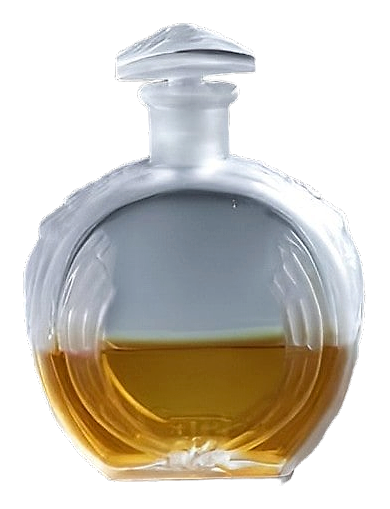
The signature
How Marius composes
Reboul's signature technique involved the careful layering of rich florals over warm, resinous bases, anchored by the amber and balsamic materials he sourced with obsessive attention. He worked comfortably with aldehydes and the new synthetic musks arriving from Givaudan's research labs, yet kept aldehyde levels restrained, allowing them to lift a bouquet rather than dominate it. Iris, rose, jasmine, and neroli appear throughout his documented work, always set against sandalwood, vanilla, and the deeper animatic notes. His compositions tend to read as classical and unmistakably French, with a density and sillage that speaks to the couture era he served. The Rigaud fragrance that bears his name shows this exact sensibility: opulent florals cushioned by a plush oriental base.
Philosophy
What drives Marius
Reboul approached perfumery as a chemist first and an artist second. He believed a composition earned its beauty through the integrity of its raw materials and the precision of its construction, not through novelty for its own sake. Colleagues at Givaudan remember him as exacting, even stubborn, particularly when newer synthetic ingredients threatened to displace traditional naturals. He preferred to build accords slowly, testing each layer's behaviour on skin before committing to the full architecture. This patience produced compositions that aged exceptionally well, holding their shape through decades in the bottle. His real legacy lives in the specialty bases he developed for Givaudan, formulas now embedded in countless fragrances carrying other perfumers' names.
The houses
Maisons Marius composes for
In the same league