Bruce Corrigan
Bruce Edward Corrigan arrived in perfumery through an unexpected door: the chemistry lab. Rather than pursuing the traditional apprenticeship route, Corrigan grounded his work in scientific rigor, treating fragrance creation as much an experiment in molecular interaction as an artistic pursuit. His belief in 'good chemistry' shaped every formulation, driving him to understand not just how a fragrance smelled, but why it performed the way it did when applied to skin or integrated into products. This chemist's mindset gave him a distinctive vantage point in an industry where intuition often dominated. His clients, according to available records, valued him for this precision and for his insistence that a fragrance must work as intended, not merely smell appealing in isolation. Though documentation of his commercial work remains limited in accessible sources, those who encountered his formulations noted a consistency born from methodical preparation rather than creative accident.
The hits
Notable creations
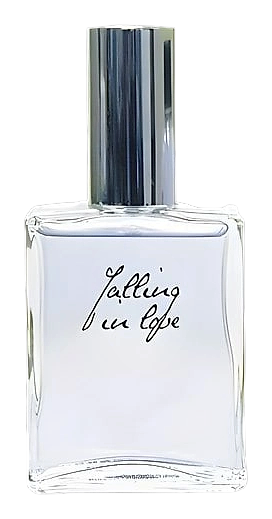
The signature
How Bruce composes
Corrigan's technical background left its mark on his compositional style. He favored clean, well-structured fragrances where each material had a clear purpose. Rather than burying individual ingredients beneath layers of complexity, he built formulations that revealed their structure. This clarity suggests a preference for materials that performed predictably and a reluctance to rely on components whose behavior might vary unpredictably. The absence of documented work makes it difficult to pinpoint signature ingredients, but his chemist's training likely drew him toward reliable aromachemicals alongside natural materials that offered both transparency and staying power. His fragrances, based on the evidence of his methodology, probably read as composed rather than chaotic, with attention to how top, heart, and base notes would behave over time rather than simply how they opened.
Philosophy
What drives Bruce
Corrigan operated from a conviction that artistry and science need not occupy opposite ends of the spectrum. He believed strong perfumery required both halves of the brain working in concert. Where some noses trusted their instincts alone, Corrigan cross-examined his intuitions against chemical reality. He applied this standard not to his own ego, but to client products, ensuring the fragrances he developed served their intended functions. This rigorous approach meant fewer happy accidents and more deliberate compositions, even if it occasionally constrained the more fanciful directions a brief might have allowed. His philosophy boiled down to a simple premise: a fragrance that fails in application, no matter how beautiful its initial impression, has ultimately failed.
The houses
Maisons Bruce composes for
In the same league