Character
How it smells
The overlooked seed with quiet depth.
Flax cultivation for linen predates Egyptian civilization by over a millennium, with wild flax fibers found in prehistoric cave dwellings.
Origin
Mediterranean Basin
Flax ranks among humanity's oldest cultivated plants, with evidence of domestication dating to approximately 8000 BCE in the Fertile Crescent. Ancient Egyptians utilized flax extensively for linen textile production, and the seeds served both nutritional and medicinal purposes.
Perfumery applications emerged later, as natural perfumers sought to incorporate the full spectrum of plant-derived aromatic materials beyond flowers and woods. Linseed absolute found modest but consistent use in classical perfumery, particularly in formulations requiring a grounding, nutty base note.
The material fell partially out of favor during the twentieth century's shift toward synthetic aromatics but has experienced renewed interest among natural and botanical perfumers seeking to expand their palette with unconventional materials. Its rarity in contemporary fragrances makes it a marker of artisanal or niche perfumery rather than mass-market production.
Good to know
Questions, answered
The essentials on Linseed in perfumery: how it smells, where it comes from, and how it behaves on skin.
What does linseed smell like in perfume?
Linseed absolute carries a characteristic nutty, fatty odor with subtle green undertones. It functions as a base note that adds depth and grounding rather than prominence.
Is linseed a common fragrance ingredient?
Linseed absolute remains uncommon in commercial perfumery. Its use is primarily limited to natural perfumers and small-batch artisanal formulations.
How is linseed fragrance material produced?
Producers extract linseed absolute using solvent extraction on flax seeds, followed by alcohol washing to isolate the aromatic compounds from the waxy concrete.
What concentration is linseed used at in perfume?
Perfumers employ linseed absolute at very low concentrations, typically below 1% of total formulation, due to its potency and fixative properties.
Does linseed have fixative properties?
Linseed absolute acts as a natural fixative, helping slower-evolving fragrance components remain detectable on the skin for extended periods.
What perfume families use linseed?
Linseed appears most often in natural, botanical, and artisanal fragrances, particularly those built around earthy, nutty, or grain-like base notes.
Is synthetic linseed available?
No synthetic equivalent exists for linseed absolute. Perfumers working without natural materials typically omit it or substitute with other nutty-smelling naturals.
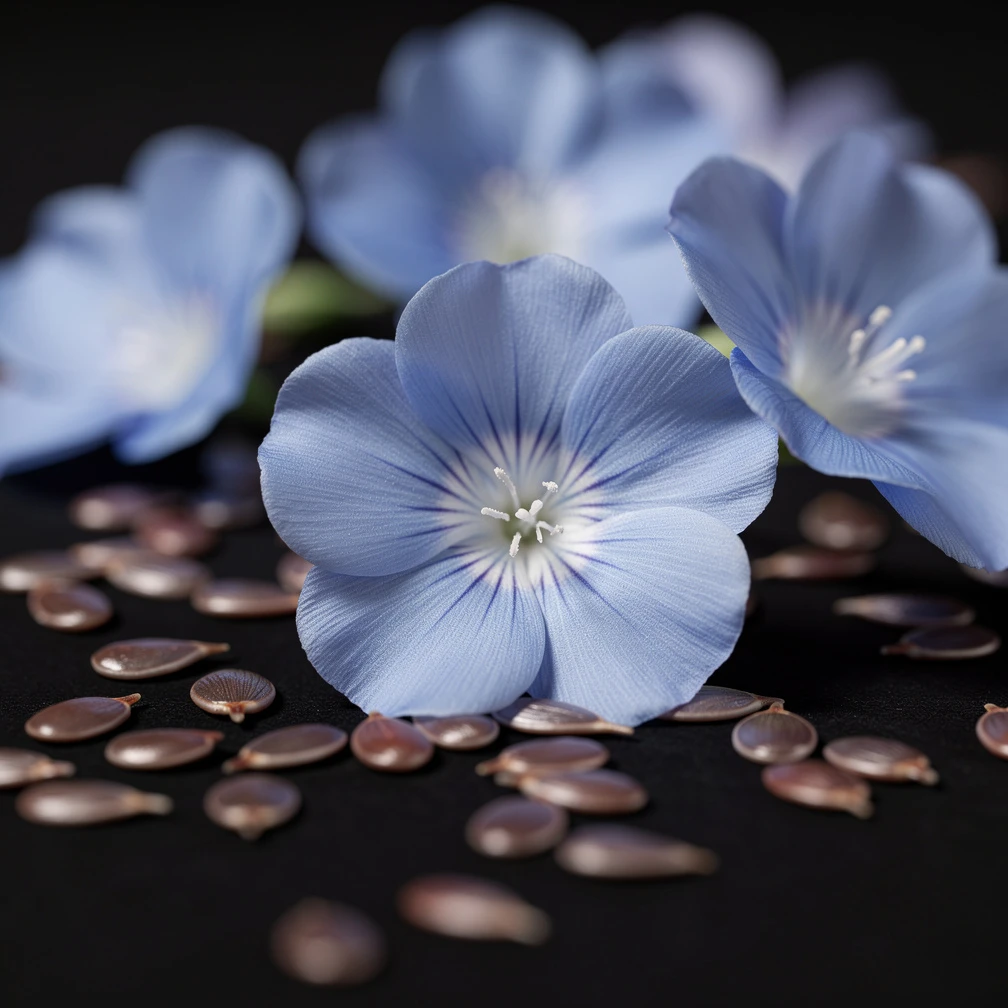
What part of the flax plant is used?
Only the seeds of Linum usitatissimum are processed for perfumery. The plant's stalks yield linen fibers, while flowers produce negligible aromatic material.