Grasse Jasminum grandiflorum
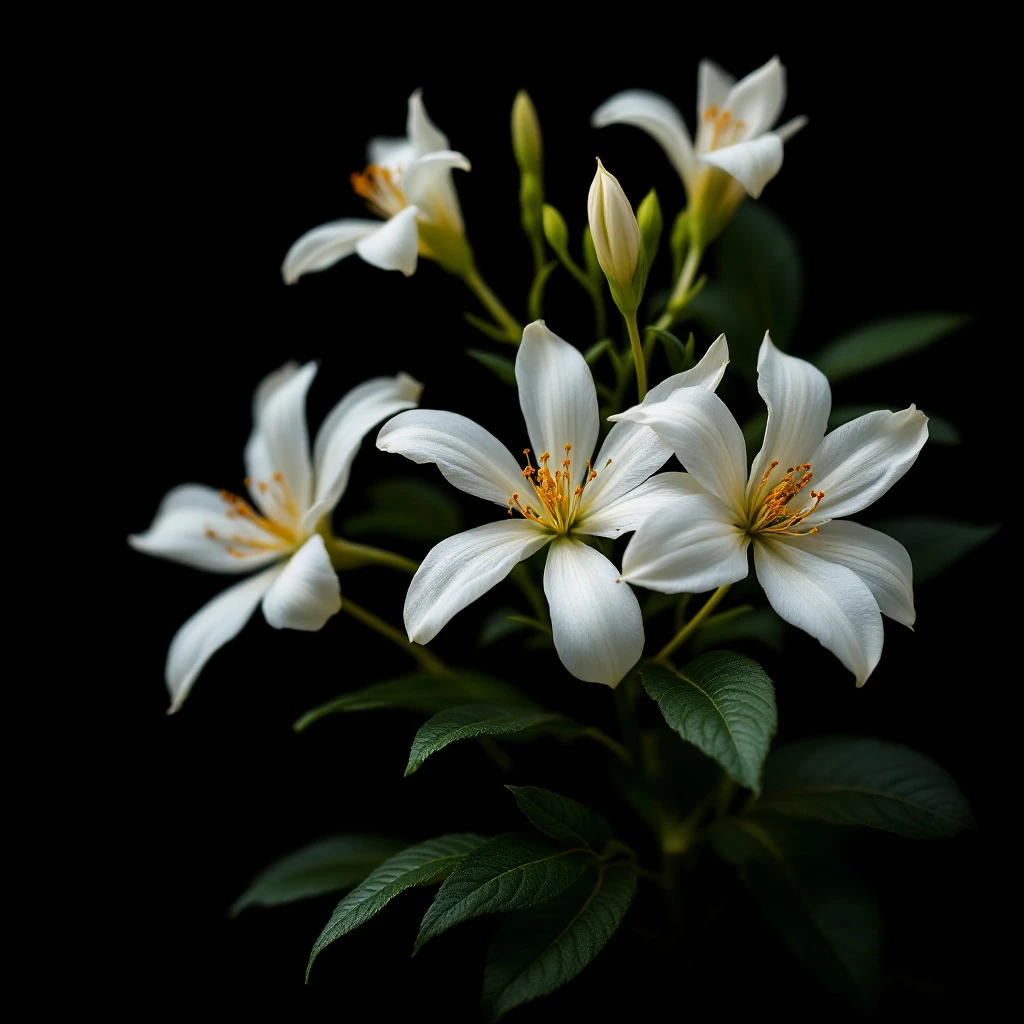
Jasmine Grandiflorum is the crown jewel of Grasse perfumery. Originally from Mexico, this star-shaped bloom adapted to the Mediterranean climate, producing a rich, warm, sensual floral absolute that anchors the world's finest fragrances.
Character
How it smells
The queen of flowers, rooted in Grasse heritage.
It takes approximately 8 million jasmine flowers to produce just 1 kilogram of absolute, making it one of perfumery's most precious ingredients.
Pairs beautifully with



Origin
France
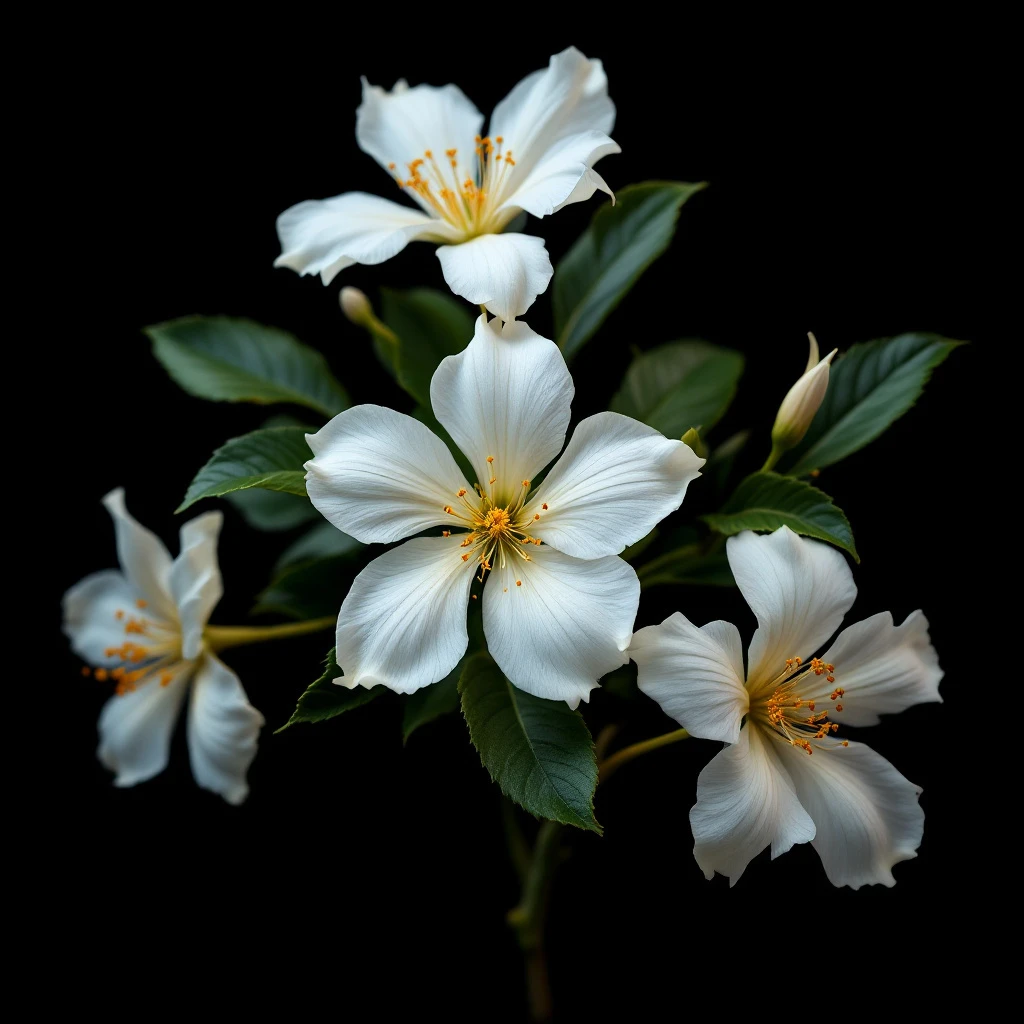
Jasmine Grandiflorum originated in Mexico, but it found its true home in the hills surrounding Grasse, France. The plant traveled from the Americas via Arab trade networks, arriving in Provence around 1548. Italian merchants first brought jasmine to the region, and Grasse industrialists later established cultivation in Egypt and India during the 1950s to meet growing demand.
The flower adapted remarkably well to the calcareous soil and microclimate of the Grasse region. Local growers developed specialized knowledge over centuries, learning which hillside plots produced the richest blooms, when to harvest for optimal scent, and how to process the delicate petals without losing aromatic potency. By the time Robertet established its jasmine operations in the 1850s, Grasse had already earned its reputation as the world capital of perfume.
The earliest civilizations of Asia and the Middle East used jasmine in sacred rituals, cosmetics, and medicine. Ancient cultures recognized the flower's intoxicating scent and incorporated it into religious ceremonies and personal grooming. This heritage gave jasmine a status that perfumers have never diminished, remaining among the most prestigious ingredients available to fragrance creators.
Today, jasmine de Grasse retains mythical status among perfumers despite global production spreading across multiple continents. The combination of heritage cultivation techniques, unique terroir, and generations of accumulated expertise continues to produce jasmine absolute with exceptional complexity. Fragrance houses still reference the origin of their jasmine specifically, whether from Grasse, Egypt, or the Tamil Nadu region, because the source genuinely matters for scent profile and quality.
Wears it best
Fragrances featuring Grasse Jasminum grandiflorum

Brands
Brands known for Grasse Jasminum grandiflorum
Good to know
Questions, answered
The essentials on Grasse Jasminum grandiflorum in perfumery: how it smells, where it comes from, and how it behaves on skin.
What gives Grasse Jasmine Grandiflorum its distinctive character?
The calcareous soil and microclimate of the Grasse region produce a jasmine absolute with exceptional roundness and richness. Only flowers harvested at dawn retain peak aromatic concentration before heat degrades the volatile compounds.
Why does jasmine require hand-harvesting?
Jasmine flowers open at dawn, when aromatic compounds reach maximum concentration. Harvesting must begin before sunrise and continue rapidly, as the volatile molecules begin degrading within hours of picking.
What makes jasmine absolute different from jasmine essential oil?
Solvent extraction captures the non-volatile waxy substances and indole traces that steam distillation would destroy. The resulting absolute has greater complexity and a more pronounced animalic warmth that pure essential oil lacks.
How much jasmine is needed to produce one kilogram of absolute?
Approximately 8 million jasmine flowers are required to produce a single kilogram of absolute. Each 1,000 flowers yield roughly 1 gram of concrete, making this one of perfumery's most labor-intensive ingredients.
Which countries produce jasmine absolute for perfumery today?
Egypt has become the world's largest producer, with cultivation concentrated in the Nile Delta. India follows, with Grasse, Morocco, and China as secondary but significant sources. Each region produces jasmine absolute with distinct olfactory characteristics.
Can jasmine be synthesized artificially?
Synthetic jasmine compounds like hedione exist, and chemists have mapped jasmine's key aroma molecules including indole and benzyl acetate. Natural jasmine absolute contains hundreds of molecules that science has yet to fully recreate.
What does jasmine grandiflorum smell like?
The absolute presents an intense, warm floral character with honeyed sweetness, fruity nuances, and a characteristic animalic depth. These qualities make jasmine exceptional as both a heart note and a fixative in fragrance compositions.
What role does jasmine play in perfumery?
Jasmine Grandiflorum serves as a cornerstone heart note across fine fragrances. Its sensual warmth and fixative properties add depth to women's florals and appear frequently in men's aromatic and woody compositions as well.