Cockscomb
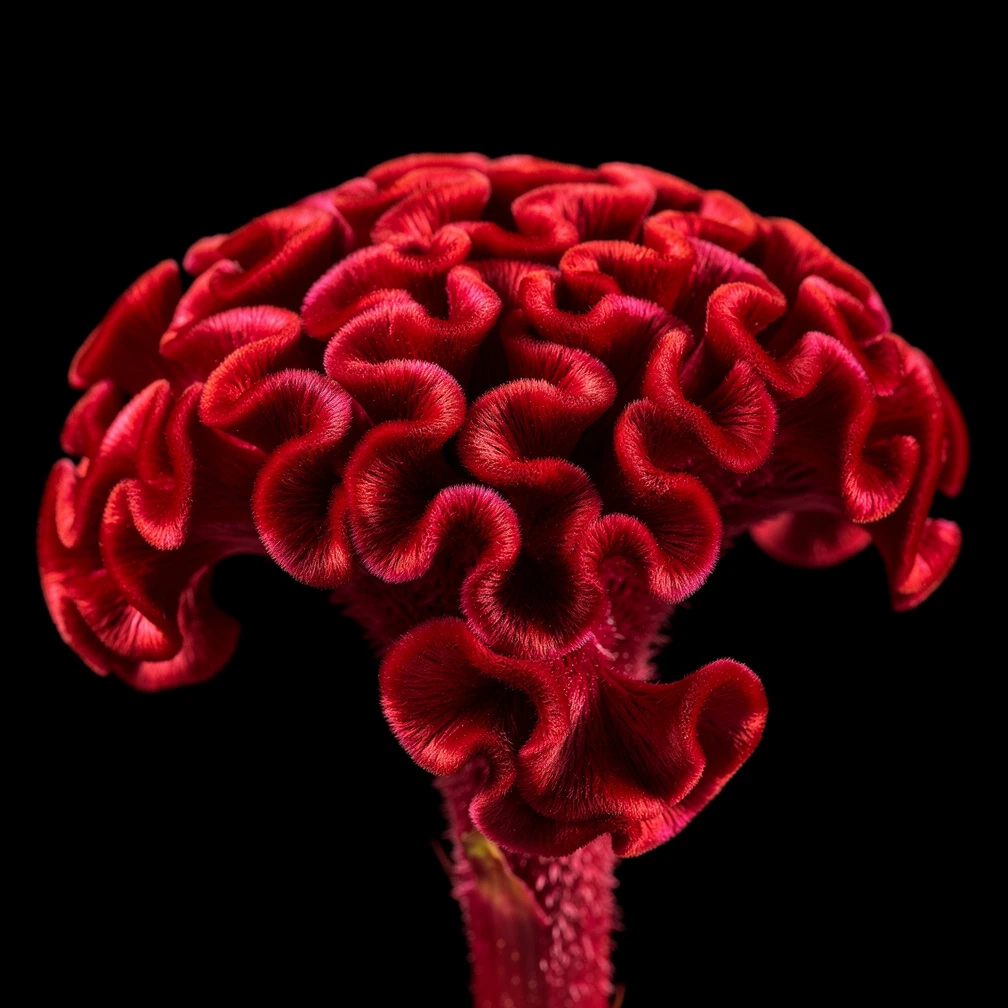
Celosia cristata, the eye-catching crested flower named for its rooster-comb silhouette, carries centuries of symbolism and vibrant color in its velvety petals.
Character
How it smells
A bold ornamental with quiet cultural depth
Cockscomb holds a cherished place in Day of the Dead altars in Mexico, its crimson blooms symbolizing grief and remembrance.



Origin
Mexico
Celosia cristata traces its cultivation roots to tropical regions of Africa and the Americas, where it thrived as both a food source and ornamental specimen. Spanish colonizers brought the plant to Mexico during the colonial period, where it rapidly integrated into local horticultural traditions.
The Aztecs cultivated ancestor to modern cockscomb varieties, prized for their dramatic form and intense coloration. Over subsequent centuries, the plant spread throughout Asia, where it became embedded in traditional medicine systems and festival decorations.
Its journey from ancient cultivation to modern gardens spans multiple continents and cultures, yet it never entered the established canon of perfumery ingredients. This historical absence leaves cockscomb as an intriguing botanical possibility rather than a documented aromatic material.
Wears it best
Fragrances featuring Cockscomb
Brands
Brands known for Cockscomb
Good to know
Questions, answered
The essentials on Cockscomb in perfumery: how it smells, where it comes from, and how it behaves on skin.
Is cockscomb actually used in perfumery?
No. Celosia cristata does not appear in mainstream perfumery as an aromatic ingredient. It remains primarily an ornamental and ceremonial plant with no established extraction or fragrance applications.
Does cockscomb have a scent?
Published sensory data on cockscomb fragrance does not exist in perfumery literature. The plant is not categorized among aromatic florals used in fragrance production.
What is cockscomb used for instead of fragrance?
Celosia cristata serves as an ornamental garden plant, a food source in some cultures, a traditional medicinal herb, and a decorative element in celebrations like Mexicos Day of the Dead.
Where is cockscomb cultivated?
Commercial production centers on Mexico, parts of Africa, India, and Southeast Asia, where the plant is grown primarily for ornamental and traditional medicine purposes.
Is cockscomb related to any fragrance ingredients?
Celosia belongs to the Amaranthaceae family, which does not include major perfumery materials. It shares no botanical kinship with traditional aromatic florals like rose or jasmine.
Are there synthetic alternatives to cockscomb fragrance?
No synthetic replication exists because the fragrance profile of cockscomb has not been characterized. Without sensory documentation, synthetic reproduction is not possible.
What flowers are similar to cockscomb in perfumery?
Celosia offers no documented fragrance contribution. For vibrant floral notes, perfumers typically turn to rose, peony, carnation, or amaranth-derived materials instead.