The Story
Why it exists.
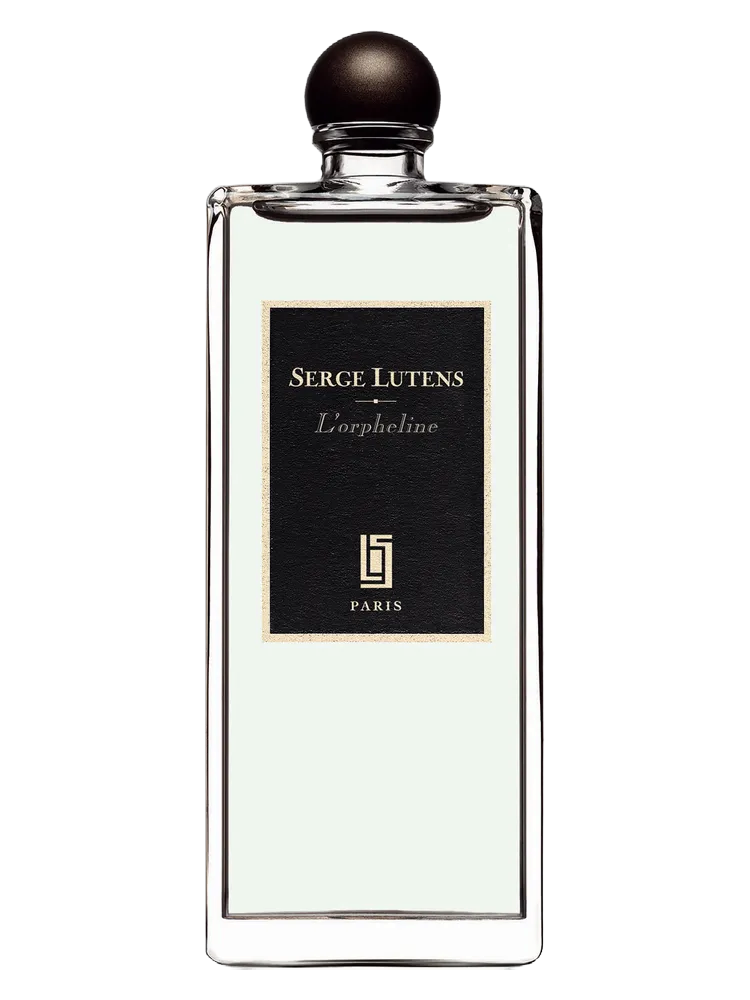
Serge Lutens arrived at fragrance through image-making, photography, makeup, a visual language built over decades at Dior and beyond. Christopher Sheldrake has been his primary collaborator since 1992. Together they make perfumes that resist easy description. L'orpheline is one of their most minimal statements: two materials, one mood. The name alone carries weight. Orphaned but whole. The first syllables conjure Orpheus, a poet who could charm even stones. That tension lives in the bottle: the power to move, wrapped in fragility that refuses to break.
If this were a song
Community picks
Low Light
Peter Frampton
The Beginning
Serge Lutens arrived at fragrance through image-making, photography, makeup, a visual language built over decades at Dior and beyond. Christopher Sheldrake has been his primary collaborator since 1992. Together they make perfumes that resist easy description. L'orpheline is one of their most minimal statements: two materials, one mood. The name alone carries weight. Orphaned but whole. The first syllables conjure Orpheus, a poet who could charm even stones. That tension lives in the bottle: the power to move, wrapped in fragility that refuses to break.
Frankincense has been used in ritual for millennia. Here it becomes something quieter. L'orpheline treats smoke as memory, something that lingers in the air, that settles into fabric and skin, that returns hours later when you've already forgotten it was there. The grey the brand references isn't a color in the bottle. It's the state between past and present, between the dust that covers things and the thing itself, still intact beneath. Musks do the quiet work: veiling, softening, holding the incense close enough that it never becomes a room-clearing statement. The restraint is the point. Not nothing. The space where something lived.
The Evolution
The opening lands as smoke. Incense and something mineral, like the smell of a room where candles burned all night and the windows haven't been opened yet. There's a clean quality underneath, skin, not synthetic. It lingers at the edge for thirty minutes, sometimes pulling back entirely before returning. The grey deepens as the top notes settle: amber-warm, resinous, the kind of warmth that accumulates rather than explodes. The drydown is where L'orpheline becomes itself. Musk lifts the smoke into something powdery, almost imperceptible. On fabric it can last days, a ghost of something warm, slightly sweet, present in the morning after you wore it the night before. On skin it retreats to the wrist and the hollow of the throat. Intimate. Difficult to catch in a crowd. Made for the hour after you've left the room.
Cultural Impact
L'orpheline belongs to a specific contemporary register: fragrances that explore what's absent rather than what's present. The smoke that retreats. The warmth that accumulates quietly. Wearers describe it as the scent of someone who walks into a room and doesn't need to announce themselves. It has a following among those who've moved through more assertive compositions and found their way to something more considered. The grey isn't metaphor, it's the state of the fragrance itself. Neither here nor there. Present but modest. Built for the long wear rather than the first impression.
The House
France · Est. 2000
Serge Lutens reshaped the boundaries of perfumery. A photographer, makeup artist, and image-maker for Christian Dior and Shiseido before he ever blended a note, Lutens brought an artist's eye to fragrance. His house, founded under Shiseido in 2000, offers over 80 olfactory stories that resist easy categorization. These are perfumes that smell like memory, like places, like emotion itself.
If this were a song
Community picks
Grey hour music. Incense smoke and quiet persistence, the sound of something arriving slowly and refusing to leave. The primary track should evoke closed rooms, low light, the space between memory and forgetting.
Low Light
Peter Frampton