
The Story
Why it exists.
The beginning
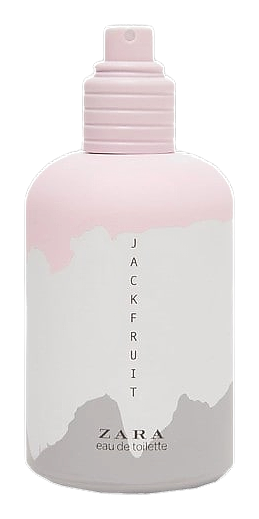
Zara's 2018 fragrance lineup reads like a travel journal, Tokyo, London, New York, places that carry cultural weight. Jackfruit breaks from that pattern. Instead of a city, it named itself after something sprawling, messy, unmistakably tropical. The jackfruit itself is massive, grotesque in the best way, native to South and Southeast Asia. By choosing a fruit over a geographic coordinate, the fragrance brings something different to the collection, rooted in sensation and tropical abundance.
The pyramid is deliberately lean: mango, peach, musk. Mango brings a characteristic lift, that green, slightly resinous edge that separates it from mere sweetness. Peach contributes body and texture, the almost-nectar quality of ripe stone fruit. Musk anchors the composition, the element that grounds the fragrance and gives it warmth, creating the impression of something that belongs on skin rather than sitting separately in the air. Each note has a clear role, working together without unnecessary addition.
The evolution
The mango opens bright and tart, no mist, no sweetness overload. Clean terpenic lift, the kind that smells like cutting into something at breakfast. The peach arrives to take over, warmer and rounder, shifting the fragrance from green to golden. The musk is a late arrival, not a base note that announces itself, it settles quietly, adding a powdery softness that rounds the edges. What remains as the fragrance develops is skin-warm and intimate. Close enough to notice, never loud enough to outstay.
Cultural impact
Jackfruit arrived in 2018 alongside fragrances named for cities and moods, but chose a fruit instead. That choice positioned the fragrance differently within the collection, bringing a playful element to a category that often takes itself seriously. The scent offered something genuinely uncomplicated and wearable, standing apart from the geographic and mood-based naming convention used for other releases in the line.