
The Story
Why it exists.
The beginning
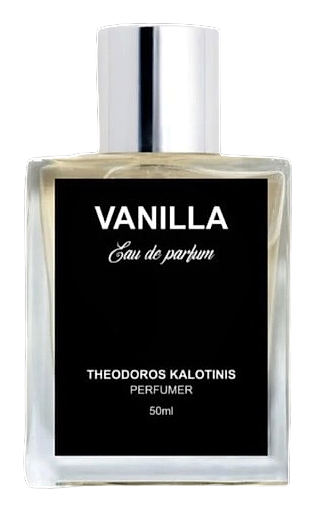
Theodoros Kalotinis has built a house around the argument that sweetness deserves to be taken seriously. Vanilla, launched in 2020, is that argument distilled. The fragrance opens with a commitment to vanilla as a material worth building around, not as a background note or a supporting player. That sense of specificity stayed with the perfumer, and it shows in the composition. The name says everything. No flourish, no metaphor, just vanilla, treated as a material worth building around. From the first spray, the fragrance announces itself with confidence, a bold declaration that vanilla can carry a composition on its own.
What makes this composition interesting is the structural choice: patchouli as the spine, not the afterthought. In most vanilla fragrances, patchouli appears as a supporting player, rounding out the base, adding warmth. Here it arrives heavy and herbal, cutting through the caramel's brightness and vanilla's creaminess with something that reads almost savory. The effect is a fragrance that smells edible without ever becoming sugary. The caramel opens sharp, almost burnt at the edges before it sweetens. The vanilla arrives warm and lingers. But the patchouli never leaves. It's the argument that keeps running underneath.
The evolution
Caramel opens bright and immediate. Not the soft caramel of confection, something sharper, almost toffee at the edges. It reads like sugar under a heat lamp, sweet and just starting to turn. The opening is bold and unapologetic, a caramel that refuses to stay in the background. As the top notes begin to settle, the vanilla makes its entrance. The vanilla doesn't rush. It slides in slowly, creamy and warm, settling into the composition like something that was always there. It doesn't overwhelm the caramel so much as soften it, turning that sharp sweetness into something richer, rounder. This is the heart of the fragrance, and it holds for a few hours. The interplay between caramel and vanilla creates a dialogue, each note responding to the other, softening edges and building depth. Then the patchouli arrives. Late, deliberate, dry. It doesn't replace the vanilla, it grounds it.
Cultural impact
Vanilla sits in a crowded space, where countless interpretations have claimed the name, but Theodoros Kalotinis approaches it with a specificity that defines the house. Where other vanillas lean into cream or coconut or tonka, this one leans into patchouli. It's a choice that divides opinion, which is probably the point. Even when the fragrance is called Vanilla, it's not content to be simple. The inclusion of patchouli transforms what could be a straightforward gourmand into something with more complexity, a fragrance that asks the wearer to engage with it rather than simply enjoy it passively.