The Story
Why it exists.
The beginning
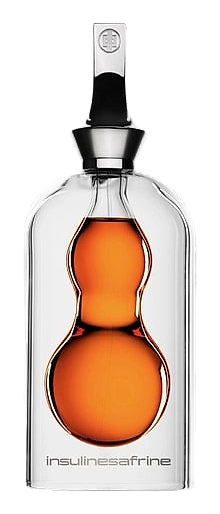
Insuline Safrine emerged from Claire Liégent's ongoing exploration of sugar as a compositional material, not as a metaphor for sweetness, but as a structural element with weight and consequence. The name itself is a portmanteau: insuline (the hormone that processes sugar) and safrine (saffron). The idea was a fragrance built around the tension between metabolic sweetness and the metallic, almost medicinal sharpness of saffron. No backstory about ancient routes or Moroccan souks. Just the molecule, the hormone, and what happens when both meet on skin.
What makes this composition unusual is the leather backbone threading through the gourmand heart. Most pastry fragrances stop at comfort, praline, vanilla, cream. This one refuses to be only warm and edible. The leather surfaces early, staying through the drydown. It doesn't argue with the sweetness; it defines it. The result is a fragrance that smells expensive not because of the materials themselves, but because of the structural decision to make something decadent that also knows when to stop being sweet.
The evolution
The opening announces itself in under a minute, saffron's metallic edge arrives first, sharp and almost medicinal, before the sweetness floods in. That first twenty minutes is the most polarizing phase: either the saffron hooks you or it doesn't. Then the praline and vanilla take over, warming into a buttery, caramelized heart that smells like Saint-Honoré cake straight from the oven. The leather never fully disappears. It lives underneath, grounding the sweetness. Two hours in, the orange blossom softens everything, floral but not delicate, a bridge between pastry and base. The drydown is warm, woody, slightly powdery: Australian sandalwood, residual vanilla, and that persistent leather. On most skin, the fragrance holds for 8-10 hours. The sillage stays strong for the first three, then settles into a close, intimate trail that lingers well into the next day on fabric.
Cultural impact
Insuline Safrine sits in a specific niche: the gourmand wearer who wants complexity, not just comfort. The comparison to Generation Godard by Toskovat surfaces regularly, burning salted caramel, syrupy pastry, but Liégent's composition adds a metallic sharpness that sets it apart. The fragrance doesn't apologize for being sweet. It wears that quality as a feature, not a flaw.