









The Heritage
The Story of Pekji
Pekji is an independent Turkish perfume house that blends personal memory with contemporary scent craft. Founded by graphic designer‑turned‑nose Ömer İpekçi, the brand emerged from an underground circle before opening its first public collection in 2018. Its catalogue spans from the early 2015 experiments to the 2021 releases, offering a handful of distinct fragrances that explore identity, culture, and raw emotion. Pekji’s bottles carry a minimalist aesthetic, while each scent invites the wearer to confront familiar moments through an unconventional olfactory lens.
Heritage
The story of Pekji begins in Istanbul’s creative underground, where Ömer İpekçi shared experimental blends with a close network of scent enthusiasts. Between 2015 and 2017, he produced small‑batch editions that circulated only among friends, building a reputation for daring compositions. In 2018, İpekçi formalized the venture, registering Pekji as a perfume house and launching a public collection that included the early releases Ruh and Battaniye. The brand’s debut coincided with a growing interest in artisanal Turkish perfumery, positioning Pekji as one of the first independent houses to market locally produced fragrances abroad. Over the next three years, Pekji expanded its portfolio with Eau Mer (2015), Odoon (2015), and the enigmatic untitled (2020). 2021 marked a pivotal year, delivering three new scents—Flesh, Purpl, and Blacklight—that pushed the house’s experimental boundaries and attracted attention from niche fragrance blogs. Throughout its evolution, Pekji has remained a small operation, relying on direct communication with its audience and limited‑run releases that emphasize craftsmanship over volume. The brand’s trajectory reflects a commitment to personal expression, a willingness to challenge conventional scent narratives, and a steady growth that respects its underground origins.
Craftsmanship
Pekji produces its fragrances in small batches, a practice that allows close monitoring of each step. The house sources raw materials from both local Turkish suppliers and established international farms, selecting ingredients for their provenance and sensory character. Natural absolutes such as Turkish rose and Anatolian cedar appear alongside laboratory‑crafted aroma chemicals, creating a dialogue between tradition and innovation. İpekçi mixes the components by hand, using a stainless‑steel stirring vessel that he calibrates for temperature and time. After blending, each batch rests for several weeks, permitting the notes to integrate fully. The house conducts blind testing with a trusted circle of peers, gathering feedback before finalizing a release. Packaging follows the same hands‑on approach: bottles are hand‑filled, capped, and labeled in the studio, with each label printed on matte paper that reflects the brand’s graphic design roots. Quality control includes visual inspection, weight verification, and a final scent evaluation to ensure consistency across the limited production run.
Design Language
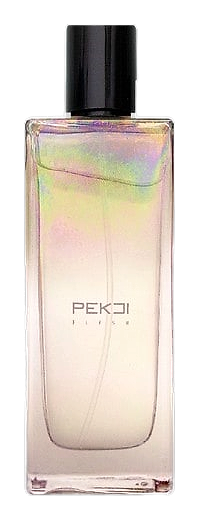
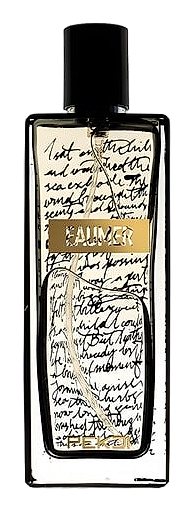
The visual language of Pekji mirrors its founder’s background in graphic design. Bottle silhouettes are simple, often cylindrical or square, with clean lines that avoid ornamental excess. Labels feature a monochrome palette, bold typography, and occasional Turkish script that hints at the scent’s cultural reference. The brand’s website and promotional materials employ a minimalist layout, allowing the fragrance name and story to take center stage. Packaging boxes are matte black or off‑white, embossed with the Pekji logo—a stylized feather that suggests both lightness and depth. The overall aesthetic conveys a quiet confidence, inviting the consumer to focus on the scent rather than flashy branding. This restrained visual identity aligns with the house’s philosophy of letting memory and emotion drive the experience.
Philosophy
Pekji treats fragrance as a journal of lived experience. İpekçi describes each perfume as a snapshot of memory, culture, or personal reflection, and the brand’s statements echo that intent. The house avoids generic claims of luxury, instead focusing on authenticity and the dialogue between scent and identity. It draws from Turkish visual culture, street sounds, and everyday aromas, translating them into olfactory stories that feel both intimate and provocative. Pekji’s creative process begins with a concept rooted in a specific moment—such as the smell of a Turkish market or the texture of a woven blanket—then translates that image into a formula that balances natural extracts with modern synthetics. The brand values transparency, often sharing ingredient lists and the narrative behind each name. By positioning fragrance as a medium for self‑examination, Pekji encourages wearers to explore their own histories through scent.
Key Milestones
2015
First underground editions, including early versions of Ruh and Battaniye, circulate among a private network in Istanbul.
2018
Official launch of Pekji as a registered perfume house; public collection releases the first commercial bottles.
2019
Ruh receives coverage in niche fragrance blogs, establishing Pekji’s presence beyond Turkey.
2020
Untitled fragrance debuts, showcasing the brand’s willingness to experiment with abstract concepts.
2021
Three new releases—Flesh, Purpl, and Blacklight—expand the portfolio and attract attention for their unconventional themes.
At a Glance
Brand profile snapshot
Origin
Turkey
Founded
2018
Heritage
8
Years active
Collection
1
Fragrances released
Avg Rating
4.3
Community sentiment
Release Rhythm


