
The Story
Why it exists.
The beginning
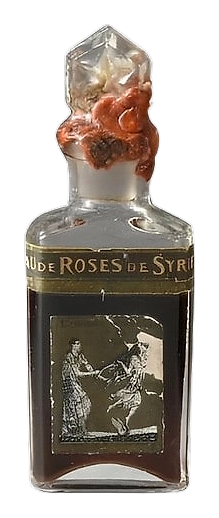
Roses de Siege emerged in 1913 from Parfums Bichara's Paris atelier, conceived as a fragrant bridge between two worlds. The brand, founded in 1896 by Syrian-born Bichara Malhame on Rue de la Paix, had long sought to bottle the roses that scented both his homeland gardens and the Parisian boulevards he now called home. This scent represents that duality made olfactory, a single flower carrying the weight of two cultures in its petals.
The philosophy behind this composition is radical clarity. Rather than build a rose in a cage of supporting notes, Bichara Malhame asked what a rose needed to simply be a rose. The answer, it turns out, is nothing. The Damascus rose in this formula is sourced with the same care as the historic originals, harvested at peak bloom to capture that precise moment of maximum olfactory richness. Every decision serves that singular flower.
The evolution
The wearing experience of Roses de Siege follows the natural lifecycle of a cut rose. It begins at its peak, full and immediate. The heart phase mirrors the flower at its most radiant, its honeyed depths revealed through contact with skin warmth. The drydown traces the gradual softening, the petals growing translucent and delicate as the fragrance gently fades. Each phase is the same rose at a different moment of its brief, beautiful life.
Cultural impact
Roses de Syrie emerged in 1913, a period when Parisian perfume houses were embracing exotic influences from the Middle East. Its creation reflected the cultural exchange between Syrian garden traditions and French haute couture, symbolising a bridge between East and West. The fragrance captured the nostalgia of Ottoman‑era rose gardens while appealing to the modern Parisian elite, reinforcing Parfums Bichara’s identity as a conduit of cross‑cultural scent narratives. Over the decades it has been referenced in literary salons and historic fashion illustrations, underscoring its role as a cultural artifact that documents early 20th‑century perfume globalization.