
    Home/Brands/Madeleine Vionnet
    Brand Profile

    Madeleine Vionnet

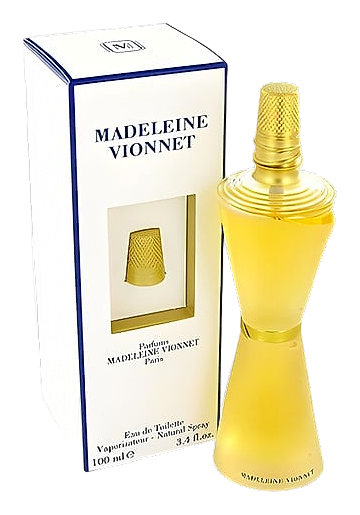
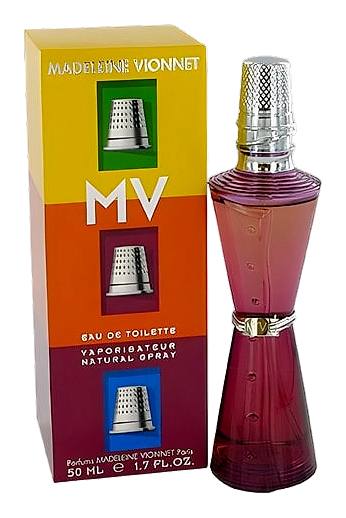
    Madeleine Vionnet occupies a singular position in fashion history as both a pioneering couturière and an enduring aesthetic reference point. The brand's fragrance line, launched in the late 1990s, translates her architectural approach to fashion into olfactory form. Three perfumes comprise the fragrance collection: Madeleine Vionnet (1996), MV (1998), and MV Green (2001). Each scent reflects the house's commitment to refined complexity over obvious glamour, echoing the couturière's philosophy that true elegance emerges from structural integrity rather than ornamentation. The fragrances remain relatively obscure outside enthusiast circles, appealing to those who appreciate fashion history translated into scent.

    FranceEst. 1912
    1
    Fragrances
    3.8
    Avg rating
    Shop the collection
    SignatureMadeleine Vionnet
    Madeleine Vionnet
    Community
    3.8
    Average rating
    across 1 fragrances
    Collection
    1
    Fragrances and counting
    Heritage
    1912
    Founded in France

    Most loved

    Bestsellers from Madeleine Vionnet

    Madeleine Vionnet by Madeleine Vionnet
    Madeleine Vionnet
    Madeleine Vionnet
    3.8
    Compare prices
    Coming soonMV by Madeleine Vionnet
    Madeleine Vionnet
    MV
    4.1
    Coming soon
    Coming soonMV Green by Madeleine Vionnet
    Madeleine Vionnet
    MV Green
    4.0
    Coming soon

    Fresh in

    New from the house

    Madeleine Vionnet by Madeleine Vionnet
    Madeleine Vionnet
    Madeleine Vionnet
    3.8
    Compare prices
    Coming soonMV Green by Madeleine Vionnet
    Madeleine Vionnet
    MV Green
    4.0
    Coming soon
    Coming soonMV by Madeleine Vionnet
    Madeleine Vionnet
    MV
    4.1
    Coming soon

    Heritage

    A house, in its own words

    Madeleine Vionnet (1876-1975) emerged from modest origins to become one of the most technically innovative couturières of the 20th century. Born in the Loiret region of France, she began her training as a seamstress at age 12. Her path led her to Paris, where she worked for several prominent houses including Jacques Doucet before establishing her own atelier in 1912 at 50 Rue de la Baume. The outbreak of World War I forced the house to close, but Vionnet re-opened in 1918, relocating to larger premises on Avenue Matignon. Her technical revolution came through the bias cut: slicing fabric at 45 degrees to the weave, she discovered that diagonally-cut cloth would drape and cling in ways impossible with traditional straight-cut construction. This innovation transformed how dresses moved on the body, creating what she called "the architecture of the body." Vionnet's clients included royalty, Hollywood stars, and American heiresses. She was among the first couturières to advocate for intellectual property protection of original designs, recognizing that her innovations required legal safeguards. The house closed in 1939 as war clouds gathered again, and Vionnet retired to Rome, eventually donating her archives to the Musée des Arts de la Mode in Paris. The fragrance line, launched in 1996 as part of a soft revival of the house, represented the first systematic extension of the Vionnet aesthetic beyond haute couture.

    The philosophy underlying Vionnet's fashion work translates directly to her fragrance line: respect for the integrity of materials, revelation rather than imposition, and architecture as the foundation of beauty. Vionnet famously stated that when a woman smiles, her dress must smile too, emphasizing that garments must accommodate movement and living rather than constraining the body. This principle informs how the house approaches fragrance composition, prioritizing scents that reveal complexity over time rather than projecting one dominant impression. The decision to work with perfumer Françoise Caron for the 1996 fragrance reflected a preference for expertise over celebrity. Caron, known for her work at Wyeth and her creation of the iconic Amenity line, brought technical precision to interpreting the Vionnet vision. The house philosophy rejects the transient in favor of the lasting, both in fashion construction and in scent development. Each Vionnet fragrance aims to function as an invisible garment, one that drapes and moves with the wearer rather than announcing itself.

    1876
    Madeleine Vionnet born in Loiret, France
    1890
    Begins training as a seamstress at age 14
    1900-1912
    Works for prominent Paris houses including Jacques Doucet
    1912
    Establishes her own couture house at 50 Rue de la Baume, Paris
    1930
    Creates the D Perfume Bottle, an early exploration of Vionnet-branded beauty
    1939
    House closes as World War II approaches; Vionnet retires to Rome

    The noses

    Perfumers behind the house

    Did you know?

    Interesting facts

    01

    Madeleine Vionnet designed and produced an actual perfume bottle around 1930, predating the formal fragrance line by six decades and demonstrating her early understanding of beauty as a total aesthetic experience.

    02

    The Vionnet house employed over 1,000 workers at its peak, making it one of the largest couture operations in Paris during the 1930s.

    03

    Vionnet was among the first couturières to campaign actively for copyright protection of original designs, recognizing that her technical innovations could be copied and diluted without legal safeguards.

    04

    The brand's fragrance line has remained remarkably compact, releasing only three perfumes over five years (1996-2001) rather than pursuing aggressive expansion.