The Story
Why it exists.
The beginning
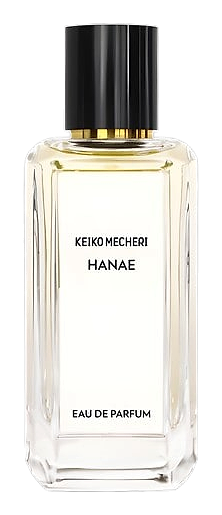
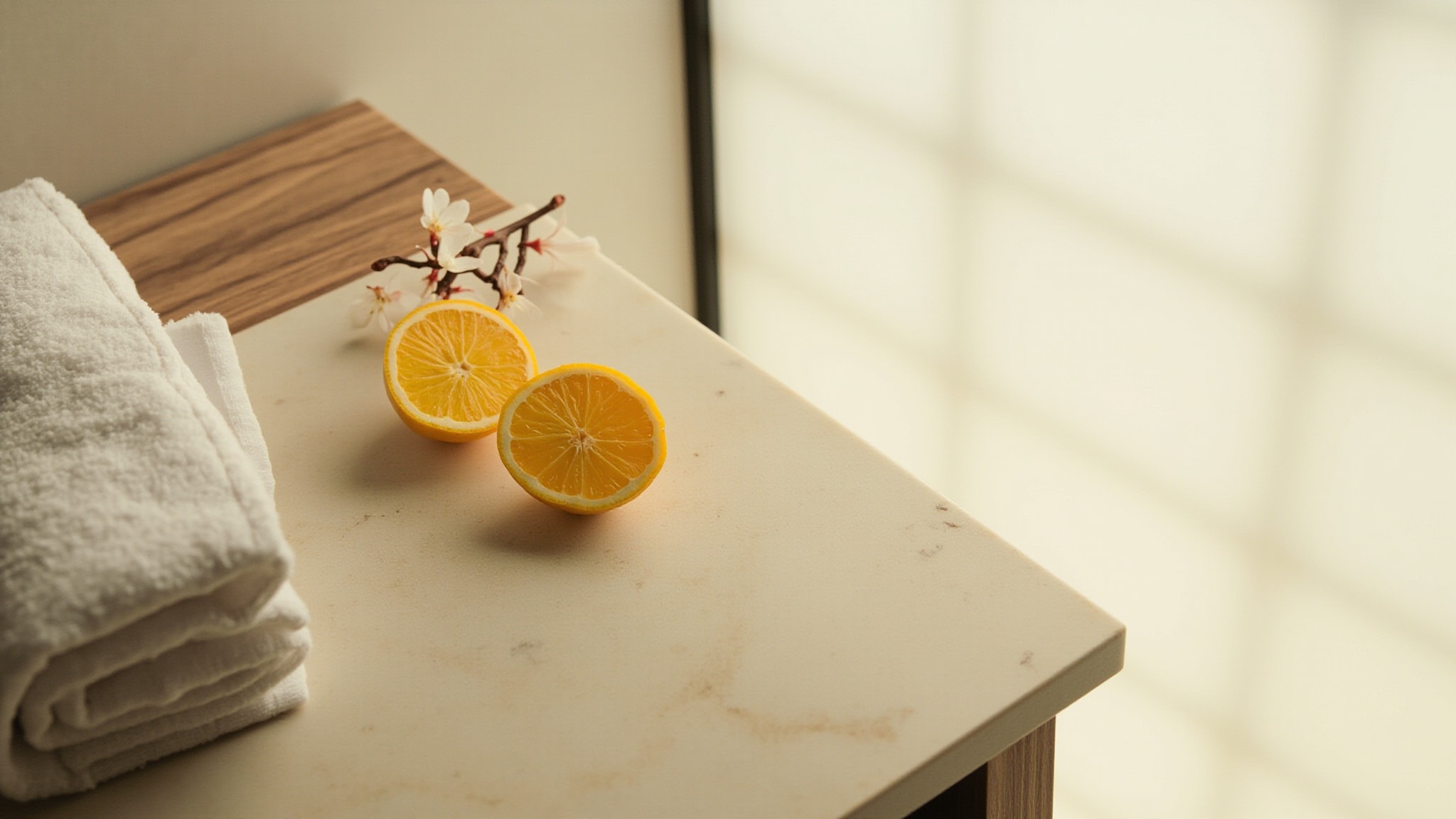
Keiko Mecheri introduced Hanae in 1998 as one of the house's first three personal perfumes. The name comes from the Japanese word hanae, evoking flower and sound in motion. The brand drew its inspiration from a specific image: a misty teahouse garden in Kyoto at pale spring dawn, where cherry blossoms drift and yuzu hangs heavy on branches still damp with morning air. That atmosphere of iridescent tenderness, the quiet between night and full light, became the brief. The result was not a loud fragrance. It was a quiet one, built for the moment the world remembers it exists.
What distinguishes Hanae is the route it takes to powdery. Most Western fruity-florals reach softness through gourmand sweetness or heavy florals. This one arrives via yuzu, a citrus that reads almost metallic at the top, sharp, bright, cold, before the white flowers and berries arrive and the crystalline musk begins to round everything into softness. The powdery quality is not an overdose of iris or violet. It is the natural consequence of white blossoms settling into crystal musk. The result is delicate without being fragile, and it has outlasted countless trends.
The evolution
The opening hits first: yuzu, bright and citrussy, with a clean edge that cuts through. This is the Kyoto morning. The white flowers arrive in the heart with a gentle weight, cherry blossom, magnolia, something softly blooming, and the red berries keep them grounded, tart and alive. This is where the powdery quality begins to emerge, not from iris but from the crystalline musk that supports the florals. As the fragrance moves into the drydown, the yuzu softens but doesn't disappear. It lingers under warm, close-to-the-skin musk and the ghost of white flowers. The sillage is moderate. This is a fragrance that stays with you, not one that announces itself across a room.
Cultural impact
Hanae has outlasted the fruity-floral trends that defined the late 1990s and early 2000s. Where many contemporaries have been reformulated into irrelevance or discontinued entirely, it remains in production, a quiet signal that the composition holds. Wearers describe it as the fragrance of someone who prefers to be remembered for their presence, not their announcement. The powdery-floral genre has seen a quiet revival in recent years, and Hanae occupies a particular corner of it: Japanese in inspiration, American independent in spirit, and still singular enough to warrant a second look.
















