The Story
Why it exists.
The beginning
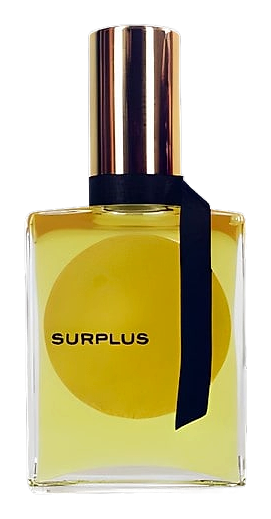
Surplus emerged from Jammie Nicholas's broader artistic investigation into waste, value, and the body. The London-based artist processed biological material from his own body, producing a fragrance that defies easy categorization. The title carries deliberate weight: surplus, in both French and English, suggests excess, byproduct, the unwanted remainder of organic processes. The project drew inspiration from Dominique Laporte's History of Shit, which traces how pleasant smells came to cover unpleasant ones, and inverted that logic entirely. The resulting scent doesn't offer comfort or familiar pleasure.
There are no top, heart, and base notes in the conventional sense. The fragrance doesn't pyramid outward, it arrives as a unified statement and slowly, imperceptibly shifts. What changes isn't structure; it's intensity and character. The opening accord remains present but gradually softens in its insistence, becoming less demanding while retaining its essential quality. Over time, what was initially most pronounced begins to recede, allowing subtler elements to surface.
The evolution
The opening doesn't build. It arrives. Mineral and fecal notes hit simultaneously, refusing the polite delay most fragrances offer. You smell it immediately or you smell nothing, there's no graceful preamble. The initial accord commands attention, presenting its full character without apology. Over extended wear, the relationship between elements shifts subtly, with certain components becoming less dominant while others gain prominence. The sillage changes in character rather than simply diminishing, moving from a statement that demands acknowledgment toward something more internal. The fragrance maintains its essential nature throughout, never abandoning what makes it distinctive. On fabric, the drydown develops differently than on skin, with the material holding traces that fade at different rates.
Cultural impact
Surplus occupies a singular position in the landscape of conceptual fragrance, less product, more proposition. It presents an alternative to the standard fragrance release model, offering something that resists comparison to mainstream offerings. The project drew interest from those engaged with contemporary art practice, attracted to its positioning within broader artistic discourse rather than beauty industry conventions. Those who encountered the work were often drawn less by the scent itself than by what it represented about possibilities for fragrance as a medium for ideas.