
The Story
Why it exists.
The beginning
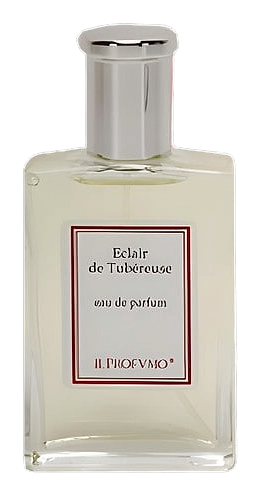
Tuberose carries weight. It smells like summer nights, like gardens at dusk, like the kind of beauty that doesn't ask permission. Silvana Casoli understood this when she built Eclair de Tubéreuse around a single, demanding flower. The name itself, Eclair, suggests something brief, a flash of light. But the fragrance lingers. It lingers in a way that contradicts the name, in a way that feels almost deliberate. The creamy, waxy white petals assert themselves fully, refusing to disappear. An animalic undertone surfaces as the scent develops, a quiet feral quality that adds intrigue without shock. The drydown becomes warm and skin-close, the white flower softened by time into something quiet and personal.
What makes Eclair de Tubéreuse interesting is its structure. Most soliflores feel incomplete, a single note stretched thin. This one doesn't. The accord profile shows green, sweet, and animalic dimensions layered beneath the dominant tuberose, creating a composition that feels whole despite having one named ingredient. The trick is balance: enough green to keep it fresh, enough sweetness to keep it wearable, enough animalic edge to give it character. It's the difference between a photograph of a flower and the flower itself.
The evolution
The opening announces itself immediately. Green, almost vegetal, the smell of stems cut at dawn. This initial phase carries a freshness that feels almost tangible before the tuberose swells, creamy and lactonic, pushing the green to the edges. The middle is where the fragrance earns its reputation. The animalic quality emerges as the indoles surface, a slightly feral undertone that some find unsettling and others find mesmerizing. On some skin, this phase lasts hours. On others, it passes quickly. The drydown is warm, skin-close, the white flower softened by time into something quiet and personal. The lasting impression is not of a loud fragrance but of presence, the kind that lingers after you've left the room. The scent evolves across distinct phases: the green, almost vegetal opening, the creamy lactonic heart, the animalic depth, and finally the warm skin-close finish.
Cultural impact
Eclair de Tubéreuse arrived during a period when niche perfumery was carving out its identity separate from mainstream fashion houses. The release from Il Profvmo embodied this positioning precisely: a soliflore that refused to compromise, launching tuberose without apology or softening agents. The fragrance found its audience among collectors who tracked niche releases through specialty retailers rather than department stores. Its subsequent discontinuation cemented its status as a cult piece, demonstrating how limited availability transforms a perfume into a collector's objective.