
The Story
Why it exists.
The beginning
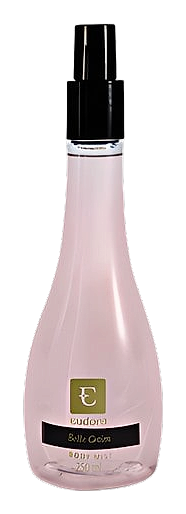
Belle Cetim arrived in 2013, a year into Eudora's presence in Brazil's fragrance landscape. The brand built itself around a customer who wanted personality over ceremony, scent as a wardrobe choice rather than an occasion uniform. Belle Cetim leans into that brief with a composition that feels studied but never stiff. The name itself carries the concept. Floral, fruity, woody, the three accord families stacked like layers of a light dress that moves when you walk. There's kiwi at the top, bright and a little tart, peach sweetening the picture before it can go too sharp. The floral notes soften what's left, rounding the edges without naming themselves outright.
What sets Belle Cetim apart in a crowded field of floral-fruity launches is the way patchouli holds its weight against the sweeter elements. Here, the patchouli doesn't recede into the background like a polite afterthought. It sits at the same table as the fruit, refusing to let the peach and kiwi run the entire conversation unchallenged. The sour accord sharpens the edges where it counts, stops the composition from sliding into syrup territory before anyone notices. The fruit reads as confident in its own skin.
The evolution
The opening belongs to the fruit, and it makes no apology for taking center stage. Kiwi arrives carrying a green, almost tart snap, sharp enough to register immediately. Peach layers in soft and ripe right behind it, sweetening the picture without smoothing it flat. The florals surface next, but they don't arrive as a distinct bouquet. They settle in as a softening, a veil that rounds the fruit's sharper angles without ever stepping forward to introduce themselves. As the composition wears on, the patchouli takes over the conversation. The fruit doesn't vanish. It deepens, melds with the woodiness, becomes less of a snack and more of a warm impression left on fabric. What remains shifts toward patchouli with the memory of peach still clinging close to the warmth of skin.
Cultural impact
Belle Cetim earns attention for the patchouli in its base, which gives the composition more grounding than a typical floral-fruity construction. The fruit here refuses to behave as decoration. It carries its weight alongside the earthier notes, sharing the stage rather than waiting in the wings for the drydown. The sour accord keeps the sweetness honest, stops the composition from drifting toward the syrupy territory that flattens so many launches in this category. The patchouli does the same work on the other end, anchoring the whole construction with warmth that lasts.