The Story
Why it exists.
The beginning
David Seth Moltz built Orris Root as a meditation on a single material. Released in 2008 as part of the Masculine Collection II Solos, the fragrance strips everything away, no top-mid-base pyramid to navigate, no blend of contradictions to decode. Just orris root, allowed to speak fully. The name isn't a metaphor. It's the whole brief. The question Moltz seemed to be asking: what happens when you let one ingredient do everything?
Orris root is one of perfumery's most demanding materials. The rhizome must cure for up to three years before it develops the compound irone, the molecule responsible for that violet-powder signature. Most houses use it sparingly, as a supporting actor. Here, it carries the entire composition. The result smells somewhere between cedar and violet, earthy and floral, root and flower. It occupies territory that most fragrances don't even try to map.
The evolution
The opening arrives quiet, that violet-powder facet hitting clean and almost medicinal. No fanfare. Within twenty minutes, the butter emerges. Warm, slightly animal, the cured-rhizome depth that separates real orris from synthetic facsimiles. The drydown strips back to something earthy and woody, a whisper that stays close to the skin for 6-8 hours depending on application. It doesn't evolve dramatically. It deepens. Settles. Refuses to leave.
Cultural impact
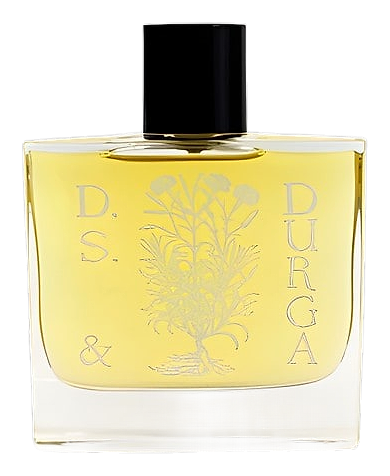
Orris Root has accumulated a quiet following among those who seek it out, particularly since its discontinuation. It occupies an unusual position: a single-note fragrance from an indie house that predates the current wave of minimalist perfumery. For collectors of D.S. & Durga's earlier work, it's a sought-after artifact.