












Heritage
A house, in its own words
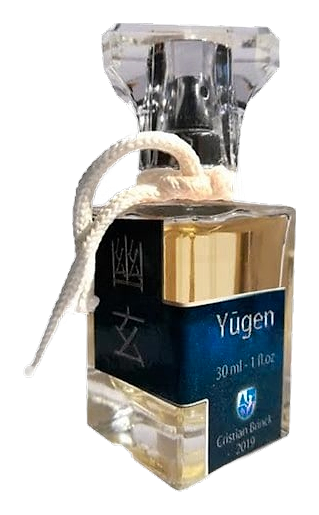
Cristian Brinck began in Chile in 2018, a relatively young addition to the country’s perfume landscape. The founding idea was personal rather than inherited: Brinck wanted to build a fragrance practice around individual inspirations, strong creative direction, and compositions intended to provoke an emotional response. Early releases established the house’s appetite for titles that carry a distinct idea or character. Jardin Du Prince appeared in 2018, followed by a concentrated sequence of releases in 2019, including Yūgen 幽玄, Gaman 我慢, and Kimura Shigenari 木村重成. The year 2020 brought Time Hunter, Aqua Antartic, Peace Medal, and E’o ariki into the catalogue, while Pablo’s Pipe and Vincent’s Irises arrived in 2021. That body of work gives the brand a short but traceable history, moving from its Chilean origin to a collection marked by artistic references across Europe, East Asia, the Americas, and symbolic or imagined identities. Publicly available information about the company’s early years is limited, and much of the available material comes from retail listings, fragrance databases, and the brand’s own presentation. As a result, the safest account of its heritage is the verifiable chronology: a 2018 founding, an expanding catalogue across the following three years, and a continuing focus on narrative-led perfume making. The central idea behind Cristian Brinck is that a fragrance should begin with inspiration and lead to an experience. Brinck’s own description characterizes the perfumes as handmade, expressive, and intense, with each composition tied to a distinct creative premise. This approach places character ahead of broad appeal. Rather than relying on a single house style, the catalogue uses titles, concepts, and names to open different imaginative doors. Pablo’s Pipe suggests an object and its associations, Vincent’s Irises brings a painter and his subject into focus, and the Japanese titles Yūgen 幽玄 and Gaman 我慢 extend the house’s curiosity beyond Western references. Time Hunter and Peace Medal likewise frame perfume through evocative language rather than straightforward functional notes. The philosophy feels personal and editorial. Each fragrance operates as a chapter in a wider creative world, while the wearer is invited to interpret the story through scent. This is also why the house’s naming is especially important. A name establishes the emotional and cultural frame before the first aroma is encountered. The result is a collection with the atmosphere of a cabinet of curiosities, one that values difference, atmosphere, and the space between idea and interpretation.