The Story
Why it exists.
The beginning
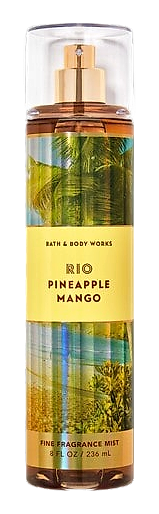
The name says Rio, and the scent earns it. Not the Rio of postcards and polished beaches, something wilder. Bath & Body Works built this as an online-exclusive drop in 2024, leaning into the tropics as a state of mind rather than a decorative concept. The brief was simple: tropical that hits before it settles, that announces itself and means it.
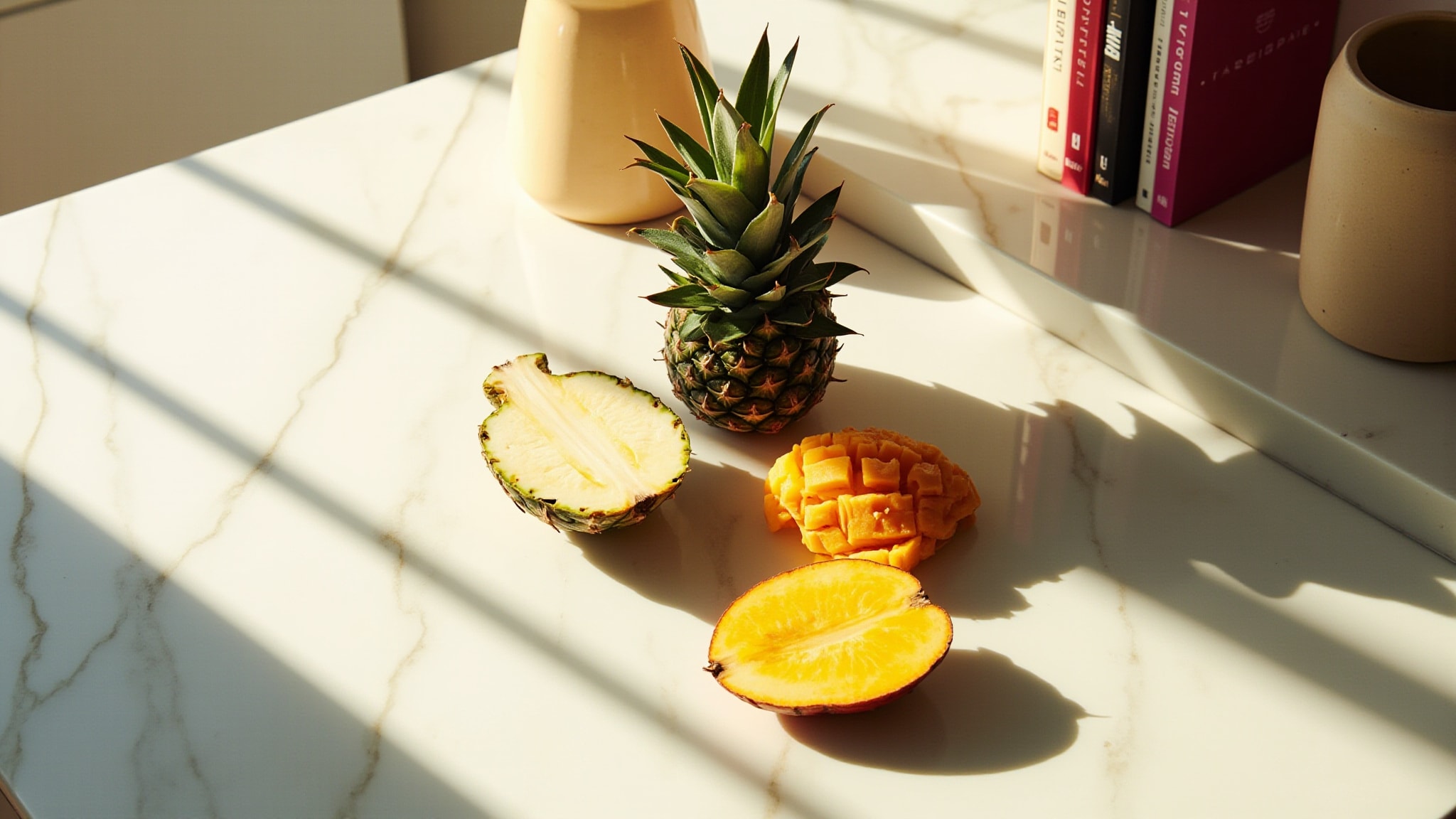
The note structure is unusual for a mass-market tropical. Most fragrances in this genre start sweet and stay sweet, the pineapple reads as syrupy, almost decorative. Rio Pineapple Mango flips that. The pineapple opens green, almost vegetal, with an underripe quality that one reviewer compared to 'jungle-y, planty.' It's not trying to smell like a piña colada. It's trying to smell like the fruit still on the vine, before anyone picked it. The raspberry and mango soften the edges, but they don't domesticate them.
The evolution
The opening slaps. Green pineapple, bright and almost aggressive, with none of the rounded sweetness you'd expect. Within minutes the mango arrives, still not fully ripe, still carrying that slight tart edge. The raspberry adds a whisper of softness but never overtakes. Then, around the two-hour mark, something shifts. The top notes begin to recede and the vine accord reveals itself, not as a linear continuation but as a quiet anchor. The fruit doesn't disappear so much as it settles. What lingers is a warm, close skin-scent, intimate by design, that holds for another four to six hours depending on your skin. On fabric, it fades gracefully overnight.
Cultural impact
Tropical fragrances have been a consistent presence in Bath & Body Works' seasonal rotations, but Rio Pineapple Mango stands apart by leaning into green, underripe fruit rather than the sweet, edible tropical that typically dominates this category. It's an acquired taste, reviewers describe it as 'strange,' 'linear,' and 'for weirdos,' which reads as a compliment in the fragrance community's vernacular. The online-exclusive release signals an experimental approach, releasing into the wild without the safety net of in-store tester discovery. The mixed reception, some praising the unusual green quality, others calling it too synthetic, suggests this one splits the room. For wearers who want tropical that challenges rather than comforts, it occupies a genuine niche.