
The Story
Why it exists.
The beginning
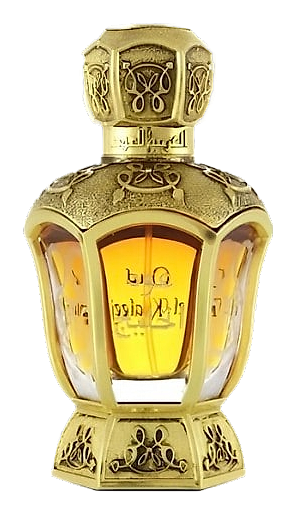
The name says it plainly. El Khaleej means the Gulf, and Oud El Khaleej translates as the oud of the Gulf. Arabian Oud released the fragrance in 2013, rooted in a tradition where oud oil has long served as the centerpiece of personal scent, worn neat from a small vial or layered into a broader composition. What sets this one apart is how little it does beyond the core material. There is no bright citrus to cut the density, no rose to round the edges, no saffron to add warmth. The fragrance arrives as an oil pour that lets the oud speak with the kind of clarity you rarely get in a blended composition. On skin, the opening reads as a dense, almost lacquered wave of resin, smoky and slightly medicinal, the way burning agarwood fills a room without ever feeling sharp.
What makes Oud El Khaleej different from a typical oud blend is what it leaves out. The fragrance skips the rose, saffron, amber, and musk that usually frame the oud in a broader composition, choosing instead to let the wood hold the floor by itself. The result is a study in restraint, a single material given enough room to show its full range of expression. On the skin, that range unfolds slowly. The opening carries the dense, smoky character of freshly heated agarwood, almost medicinal, with a warmth that never tips into sweetness.
The evolution
Oud El Khaleej doesn't open so much as arrive. The first hour is the densest part, a thick, almost lacquered pour of resin and wood that sits close to the skin and announces itself with the confidence of something that has nowhere else to be. There's warmth here, but not sweetness. The smoky edge of agarwood reads clean, like burning cedar in a well-ventilated room. Around the two-hour mark, the composition softens just enough to let the wood's natural facets emerge, a faint animalic warmth, a thread of something that recalls old leather or aged paper. By hour four, the resin recedes and the dry wood takes over, leaving a close, intimate trail that clings to fabric and hair long after the skin scent has quieted. On clothes the next morning, the drydown is still there, warm, dry, unmistakably oud.
Cultural impact
Oud El Khaleej reads as a deliberate return to a classic Gulf tradition: wearing oud neat, concentrated, and personal. The fragrance is presented as an oil rather than a spray, which echoes how oud has actually been worn across the Gulf for generations, from a small vial applied to the wrist or behind the ear. That format carries its own cultural weight, tied to hospitality rituals, religious moments, and the everyday practice of scenting oneself before leaving the house. The appeal feels regional in the best sense, grounded in a relationship with the material that predates the modern perfume industry and never really went away.