The Story
Why it exists.
The beginning
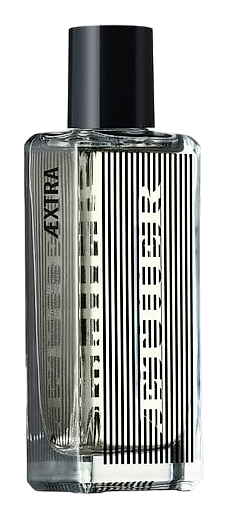
Nicolas Beaulieu built Aextra around one molecule taken past its usual dose. Bacdanol is a synthetic sandalwood replicate, a lab creation that behaves like sandalwood but carries its own logic, its own curves and edges. Most fragrances use it as an accent. Aextra makes it the entire sentence. The brief from the brand was clear: strip away the supporting naturals, let the molecule speak without translation. Chabot's platform at Aether has always been about this kind of reduction, what happens when you isolate a single aromatic material and give it room to fill the composition on its own terms. Aextra arrived in 2019 as part of the Supraem Collection, the house's series dedicated to molecules pushed beyond conventional concentrations. Beaulieu accepted the challenge of making a synthetic replicate feel more complete than its natural counterpart, and then he went further.
The technical foundation of Aextra is what makes it interesting. Bacdanol doesn't behave like natural sandalwood. It opens cooler, more transparent, with a slightly medicinal clarity that natural Mysore sandalwood lacks. As it settles, the creamy quality emerges, but it's a different kind of cream, dryer and more powdery than the fatty warmth of the real thing. Evernyl, the second pillar of the composition, is a synthetic substitute for oakmoss, it brings the same bitter-green depth without the restriction concerns that have sidelined natural oakmoss in modern perfumery. Ethyl linalyl acetate provides the initial lift, a clean citrus-adjacent opening that keeps the early minutes from feeling heavy.
The evolution
The opening hits clean. Ethyl linalyl acetate arrives first, a sharp, transparent lift that reads more laboratory than garden. It clears the air for about fifteen minutes before Bacdanol begins its slow assertion. What follows is not a dramatic transformation but a steady settling, like a photograph coming into focus. The sandalwood accord develops across the next two hours, gaining texture as Cashmeran wraps around it, adding a soft, slightly musky warmth that keeps the wood from feeling austere. Hedione contributes a transparent floral ghost, jasmine-like but barely there, more suggestion than presence. Cedar arrives late, around hour three, grounding the composition with something drier and more angular. By hour four, the fragrance has simplified into its purest form: a warm, powdery wood that sits close to the skin and changes very little for the remaining duration. On fabric, the drydown can persist into the following day, a faint, clean warmth that laundering barely suppresses.
Cultural impact
Aextra occupies a specific position in the niche fragrance landscape, appealing to the collector who already knows synthetic molecules well and wants to see what happens when one is pushed past its normal limits. The comparison to Escentric Molecules' Molecule 04 is inevitable, since both fragrances center on a single synthetic material, but Aextra takes a warmer, more powdery direction. Wearers who connect with Aextra tend to be those who treat fragrance as a chemistry problem first and a sensory experience second, people who read about Bacdanol and want to smell what an overdose of it actually does. The fragrance rewards patience and curiosity rather than seeking to impress on first contact.