Wei Bai
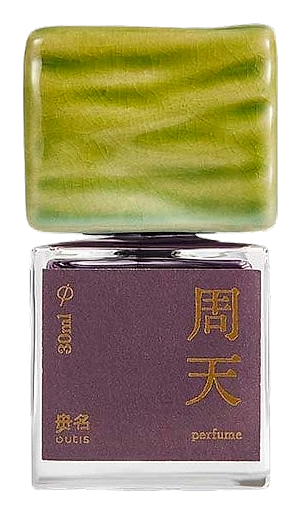
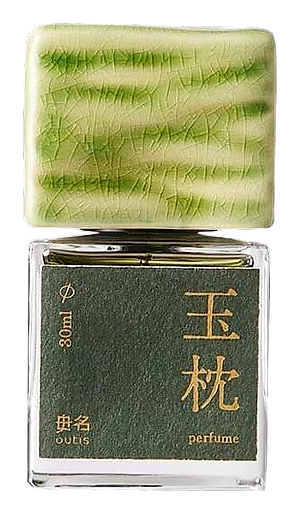
Wei Bai is a perfumer working in the intimate, often hidden spaces of independent fragrance creation. Best known publicly for his contributions to Outis 毋名, Wei Bai brings a perspective shaped by personal experience with anosmia, the partial or total loss of smell. Where most perfumers build careers around developing their sense of scent, Wei Bai has navigated the discipline with a unique, deeply considered approach to composition, relying on structure, texture, memory, and chemical knowledge rather than purely olfactory reference. His work on Outis 毋名, a house built around the idea of mystery and the unnamed, reflects a perfumer more interested in evocation than spectacle. The brand's quietly provocative positioning aligns with what little is publicly known about Wei Bai's creative sensibility: precise, understated, and resistant to easy categorization. In a fragrance culture that often celebrates loud signatures, his contributions suggest someone more interested in what a composition leaves in the air after it settles, the space between the wearer and the room.
The hits
Notable creations




The signature
How Wei composes
Little is publicly documented about Wei Bai's specific ingredient preferences or compositional signatures, and any detailed claim here would be guesswork. What can be inferred from his association with Outis 毋名 is a preference for restraint over excess, for compositions that reveal themselves gradually rather than all at once. The house's emphasis on conceptual depth and the unnamed suggests a perfumer comfortable with negative space, with accords that breathe. Independent perfumers in this space tend to work in smaller batches, giving more room to adjust the architecture of each formula. Wei Bai appears to belong to that lineage of meticulous, small-scale work rather than the volume-driven mainstream. His anosmia, whether partial or complete, likely informs a technical fluency with raw materials that prioritizes how things should smell on paper and on skin rather than how they smell to him in the moment of mixing.
Philosophy
What drives Wei
Wei Bai approaches perfumery with a humility that comes from a genuinely unusual vantage point. Living with a limited or absent sense of smell reframes the act of composing a fragrance. Where many perfumers describe working from an impression or a mood, Wei Bai appears to work from architecture, an understanding of how materials interact on the skin, how a chord of aromatics will behave over hours, and what emotional residue a composition will leave. His philosophy, as glimpsed through his work with Outis 毋名, seems to prioritize the listener over the speaker, the person encountering the scent rather than the creator announcing it. There is a quiet radicalism in that stance. In an industry obsessed with projection, sillage, and statement-making, a perfumer who cannot fully smell what he has made must trust the wearer to complete the experience. It is an unusual form of generosity embedded in the work itself.
In the same league