Pierre-François Pascal Guerlain
Pierre-François-Pascal Guerlain arrived in Paris in 1828 with a chemist's training and an inventor's instinct. Born in Abbeville in 1798, he had studied medicine and chemistry in England before setting up his first boutique on rue de Rivoli. His scientific background gave him an edge in a trade often dominated by intuition alone. Within two years, he had caught the attention of Empress Eugénie, who appointed him her official perfumer—a designation that brought aristocratic clientele flooding through his doors. He approached fragrance formulation like a researcher, blending traditional aromatic knowledge with systematic chemical understanding. The house he built would go on to create over 1,100 fragrances across its history, but the founder's particular genius lay in making luxury feel personal. He reportedly mixed each preparation himself and kept meticulous records of every formula, treating perfumery as both craft and science. His elegance and cultivated manner earned him entry into the highest circles of Parisian society, where he counted writers, politicians and royalty among his clients. He laid the groundwork for a house that would remain family-controlled for more than 150 years, establishing standards that his descendants would maintain.
The hits
Notable creations
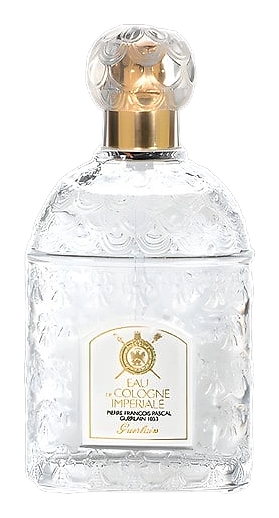
The signature
How Pierre-François composes
Guerlain favored rich, elaborate constructions typical of 19th-century French perfumery. He worked extensively with natural materials—rose, jasmine, vanilla, citrus, and various resins—and believed in the importance of long development curves, allowing compositions to mature before assessment. His training in England gave him exposure to different aromatic traditions, which he incorporated into his French work. He kept detailed notebooks of his experiments and formulas, treating documentation as essential to the craft. Though he embraced new materials when they proved superior, he remained committed to natural aromatics as the foundation of serious fragrance. His signature approach combined dramatic opening notes with sustained depth, creating perfumes that evolved meaningfully on the skin over hours.
Philosophy
What drives Pierre-François
Guerlain believed that true perfumery required mastery of both art and science. He dismissed purely intuitive approaches, insisting that a serious perfumer must understand the chemical properties of raw materials. This scientific rigor coexisted with an acute sensitivity to beauty and proportion. He treated each fragrance as a composition requiring balance, and he reportedly considered fragrance-making a form of eloquence—something that could speak to emotion without relying on words. Customer relationships mattered deeply to him; he would consult with clients to understand what they sought, then develop bespoke formulations tailored to their preferences. This bespoke tradition became a cornerstone of the house's early identity, setting it apart from perfumers who simply produced for the market. He valued invention but understood that lasting fragrance required discipline and patience.
The houses