Laurène Lafitte
Laurène Lafitte is a Parisian perfumer whose craft sits at the meeting point of classical French training and international laboratory experience. She studied at the École Supérieure du Parfum and built her professional foundation at Takasago Europe’s perfumery laboratory, a setting that places her within a rigorous, research-led tradition of scent creation. Her work came to wider recognition through collaboration on Indices Parfums, where she contributed alongside perfumers Cécile Doan, Spyros Drosopoulos, Mathilde Bolen and Grégoire Balleydier. That collaborative project, with its focus on place and atmosphere, marked a defining early chapter in her career. A profile of Lafitte’s style reads less like a single artistic signature and more like a practiced curiosity: precise composition, an instinct for atmosphere, and a willingness to explore how a fragrance can carry the feeling of a specific environment.
The hits
Notable creations
The signature
How Laurène composes
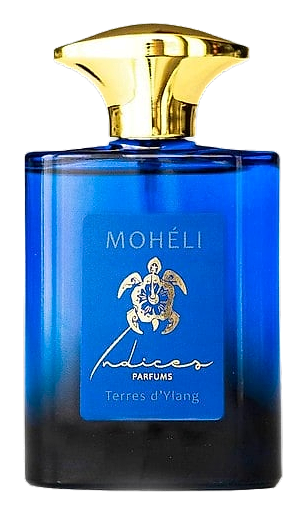
Laurène Lafitte’s technique draws on the precision associated with fine perfumery laboratory training and the atmospheric sensibility evident in her work for Indices Parfums. Moheli stands as her most visible recorded creation, offering a point of reference for a style concerned with location, character and mood. Her compositions read as deliberate and structured, where the architecture of the accord allows individual materials to contribute texture and depth without shouting for attention. The École Supérieure du Parfum training equips her with a command of classical construction, while her laboratory experience adds a scientist’s attention to raw material behavior. This combination suggests a perfumer equally comfortable with nuance and control, building fragrances that reward close listening rather than immediate impact.
Philosophy
What drives Laurène
Laurène Lafitte approaches perfumery as a study in place and perception. Her work on Indices Parfums, including Moheli, suggests an interest in capturing the sensory character of a location rather than illustrating it literally. The name itself points toward an idea of origin, of atmosphere made wearable. Working between the formal discipline of perfumery school and the technical demands of a major laboratory, she pairs instinct with structure. This balance shapes compositions that feel considered without losing their sense of discovery. Her approach favors the kind of detail that rewards attention: a texture, a temperature, the quality of light in a particular setting. For Lafitte, a fragrance succeeds when it evokes a convincing sense of somewhere rather than simply announcing itself.
The houses