Claude Fraysse
Claude Fraysse built his career in fragrance the way a craftsman builds a reputation: quietly, methodically, and with results that speak for themselves. Trained as a chemical engineer, he cut his professional teeth at Firmenich in Geneva, the Swiss powerhouse known for pairing scientific rigor with creative ambition. That grounding in chemistry informed everything that followed, including a stint as lead perfumer for Yardley in London, where he developed compositions for one of Britain's most enduring mass-market fragrance houses. His reputation for technical precision and refined taste eventually led him to Parfums Weil, the Parisian couture house founded by the Weil brothers. There Fraysse produced work that cemented his standing as a perfumer with a rare gift: the ability to translate the texture and density of fur into scent. His late-career chapter reflects a designer who understood that luxury fragrance, at its best, borrows the vocabulary of fashion.
The hits
Notable creations
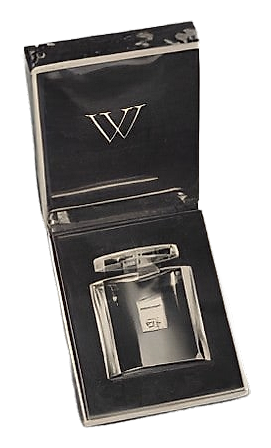
The signature
How Claude composes
Fraysse's signature rests on heavy florals lifted by green or aldehyde accents, wrapped in the warm, almost edible richness typical of late twentieth century French luxury perfumery. He shows clear affection for indolic white florals and the soft, downy musk bases that made Weil's eponymous collection famous. Compositions tend toward the opulent rather than the transparent. He builds from the bottom up, anchoring top notes with substantive bases rather than letting them evaporate into citrus brightness. The result is a style that feels distinctly vintage in the best sense: rooted in classic perfumery technique, resistant to the minimalist trends that swept through later decades.
Philosophy
What drives Claude
Fraysse approaches perfumery as a problem of materials first and emotion second. Background in chemical engineering gives him a particular respect for the architecture of a composition, where every molecule pulls weight and every accord must justify its presence. He tends to favor rich animalic textures and dense floral cores, building fragrances that feel tactile rather than airy. His work at Weil, a house inspired by furs and couture, suggests a man who thinks in fabric and finish. He treats scent as another luxury good, meant to be worn close to the skin, built to last, and designed to feel as deliberate as a tailored coat.
The houses