Character
How it smells
The scent of a legendary dessert, reimagined for skin.
No single plant smells like kunafa. Perfumers combine up to 15 different aromatic molecules to capture its layered creamy-floral-sweet profile.
Origin
Egypt
Kunafa is one of the oldest desserts in the Arab world, with roots tracing back to the Fatimid caliphate in Cairo during the 10th century. It became a staple across the Levant, Egypt, and Turkey, served at celebrations, religious festivals, and royal tables for nearly a thousand years.
The dessert's cultural weight made it a natural candidate for fragrance exploration. Around 2018, a wave of Middle Eastern and niche perfumers began translating edible heritage into wearable scent, leading to the birth of the kunafa note.
The movement drew from a long tradition of Arab perfumery, which historically blended oud, amber, rose, and musk into rich oriental compositions. The kunafa note represents a modern bridge between culinary identity and olfactory art, a perfumer's homage to a dessert that has survived centuries unchanged in form but now lives on skin.
Good to know
Questions, answered
The essentials on Kunafa in perfumery: how it smells, where it comes from, and how it behaves on skin.
What does kunafa smell like in perfumery?
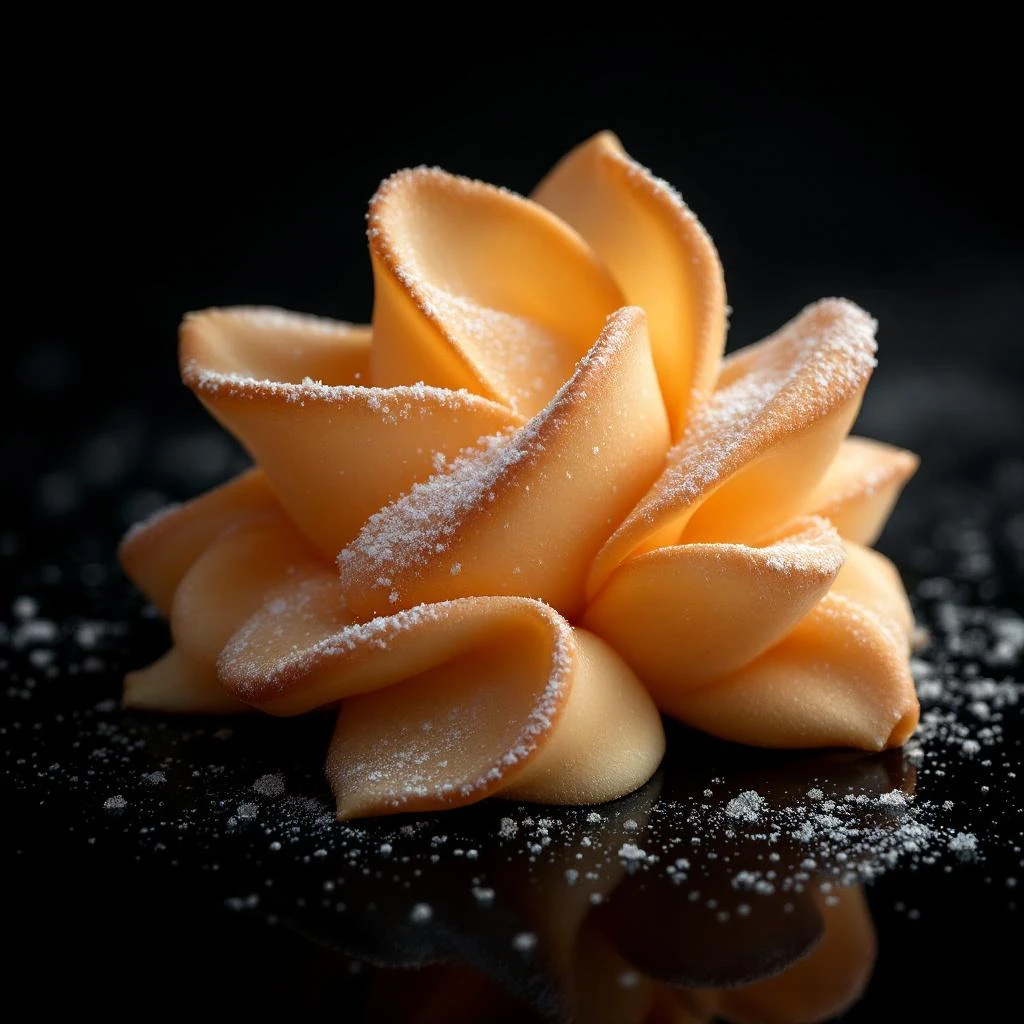
Kunafa in fragrance blends lactonic creaminess, rose and orange blossom florals, and sweet syrup warmth into a warm edible accord. Think warm pastry, creamy filling, and sticky sugar notes in one scent.
Is kunafa a natural fragrance ingredient?
No. Kunafa is a synthetic composite note built from multiple aromatic molecules, including massoia lactone, vanillin, damascenone, and hedione. No single plant naturally produces the kunafa smell.
Which perfumes feature the kunafa note?
Several niche and Middle Eastern houses have released kunafa-inspired fragrances, including Amouage Honor Woman (2019) and Auphorie Kyoto. The note often appears in gourmand-amber compositions priced in the premium segment.
Why did perfumers choose a dessert as a fragrance note?
Middle Eastern perfumers have long drawn from culinary heritage. Kunafa's warm, edible character appeals to modern consumers seeking emotional, nostalgic fragrance experiences over purely floral or woody profiles.
What are the key molecules in a kunafa accord?
Massoia lactone provides creamy coconut warmth. Vanillin adds sweet syrup depth. Damascenone delivers rosy florals. Hedione brings radiant orange blossom. Benzoin and saffron absolute round out the warm, resinous base.
Does kunafa smell different in every perfume?
Yes. Since kunafa is a composite note, perfumers vary the ratio of lactonic, floral, and sweet components. Some interpretations lean creamy and lactonic; others push toward syrupy sweetness or spiced warmth.
What family does a kunafa fragrance belong to?
Most kunafa fragrances fall into the oriental or gourmand family. They combine amber warmth, lactonic creaminess, and sweet edible notes, often with floral or spicy supporting accents.
Can I layer kunafa perfume with other scents?
Kunafa works well layered with rose, oud, vanilla, or sandalwood fragrances. Its warm, sweet base complements resinous and woody notes, but mixing it with bright citrus or aquatic scents may dull its characteristic warmth.